Gaming
42% of gamers play through neck pain, and almost none get help. The fix takes 30 seconds.
Esports is athletic now, with teams, coaches and salaries, but the bodies playing it are quietly paying. In one study 42% of competitive gamers had back or neck pain and more than half had eye fatigue, yet only 2% did anything about it. Here is what marathon sessions do to your neck and eyes, and the fix that fits between matches.
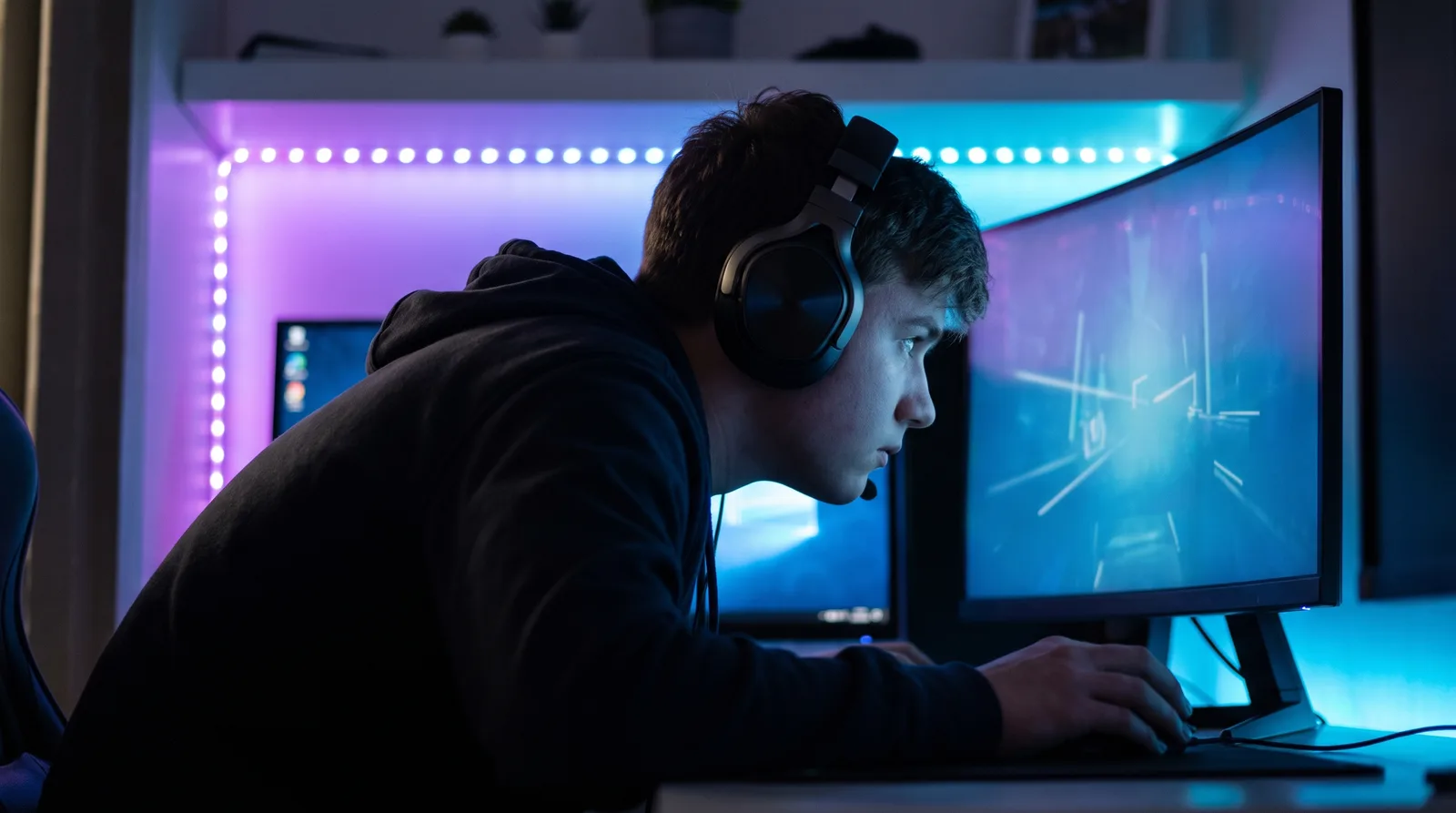
Esports has grown up. There are teams with coaches and analysts, arenas that sell out, contracts with real salaries, and training schedules that would tire an athlete. And like any athletic pursuit taken seriously enough, it has started to leave marks on the bodies doing it. They’re just not the marks you’d expect. The danger to a competitive gamer isn’t the hands. It’s the neck, and the eyes.
The numbers are quietly striking. In a study of collegiate esports athletes practising 5.5 to 10 hours a day, 42% reported back or neck pain and 56% reported eye fatigue, and yet only 2% had sought any medical help for it (DiFrancisco-Donoghue et al., 2019). Read that gap one more time. Almost half in pain; almost nobody doing anything about it, because in gaming, the ache just feels like part of the grind.
It isn’t one study, and it isn’t one country
It would be easy to wave away a single survey. You can’t wave away the pattern. A separate study of Danish competitive gamers found the same thing: musculoskeletal pain was common, with the back, neck, and shoulders among the top places it landed (Lindberg et al., 2020). And in 2026, a systematic review and meta-analysis pooled the whole body of evidence and reached the same conclusion, pain is common among esports players, with the neck and back frequently involved (Soffner et al., 2026).
So this isn’t a scare stat cherry-picked from one campus. Across countries and across the pooled research, sitting at a screen and competing for hours reliably taxes the same two places: the neck that holds your head toward the monitor, and the eyes locked onto it.
What the marathon does to your neck
The mechanism is the grind itself. A ranked climb or a scrim block isn’t a twenty-minute session; it’s hours of holding still, leaning in toward the screen when a fight breaks out, head pushed forward off the shoulders. Held for a few seconds, that’s nothing. Held for a five-hour session, the muscles at the back of your neck are doing an isometric hold they were never asked to sign up for. The ache that follows isn’t weakness. It’s overtime.
And it doesn’t stop when you rack up. The moment the session ends, the phone comes out and the head drops down into the same flexed, forward posture, “text neck,” stacking more of the identical load onto a neck that just did a full shift (Sureshbabu et al., 2025).
The part nobody talks about: your eyes
That 56% eye fatigue number deserves its own spotlight, because it’s the injury gamers normalise the hardest. Locked onto a screen, especially in the tense, don’t-blink moments of a close match, your blink rate crashes, and many of the blinks you do manage are incomplete. The tear film that keeps your eyes comfortable dries out, and you get the gritty, burning, tired-eyed feeling that so many players just accept as the price of playing. It isn’t inevitable. It’s a blink problem, and it responds to the same medicine as the neck: look away, blink fully, take the break.
The 30-second fix, borrowed from people who sit as much as you
Here’s the good news, and it’s almost annoyingly cheap. The best-tested fix for exactly this kind of screen-bound neck pain didn’t come from a gaming lab, it came from studying office workers, who sit just as long. In a randomized controlled trial, prompting people to take active breaks and shift their posture cut new neck pain from 44% down to about 17% over six months, roughly half, from nothing more than not staying frozen (Waongenngarm et al., 2021).
For a gamer, that translates perfectly, and it costs you nothing you can’t spare between rounds:
- Between matches, stand up. Even twenty seconds resets the sustained load. You have a queue timer anyway.
- Pull your head back over your shoulders and open your chest, undoing the lean-in before it sets.
- Look away from the screen and blink fully a few times, that’s the eye fix and the neck fix in one move.
- Roll the shoulders back to wake up the muscles that hold you upright.
The pros who take their careers seriously already build this in. You don’t need a contract to copy them.
The bottom line (and where we fit)
Competitive gaming asks your body to do one thing for hours, hold a forward-leaning stare at a screen, and 42% of players are paying for it in their necks while 56% pay for it in their eyes. Almost none get help, because the culture treats the ache as part of the game. It doesn’t have to be. The fix that halved neck pain in a trial was just moving, and the eye fix is just blinking and looking away.
That’s exactly what NeckCure is built to prompt, and you’re the ideal case for it, because you’re already sitting at a screen with a webcam right there. It watches for the moment your head juts forward and your back rounds, and nudges you to reset between rounds, the active break the evidence rewards, at the moment you’d otherwise stay locked in. It won’t fix a real injury or replace a doctor, and genuine, persistent pain, numbness, or tingling means it’s time to see one. But for the ordinary grind-ache of a life spent competing at a screen, the fix is 30 seconds long, and we’re here to remind you to take it.
(This is a popular article about gaming, posture, and eye strain, not medical advice. If you have persistent neck, back, wrist, or hand pain, numbness, tingling, or ongoing eye problems, please consult a qualified health professional.)
References
- DiFrancisco-Donoghue J, Balentine J, Schmidt G, Zwibel H (2019). Managing the health of the eSport athlete: an integrated health management modelBMJ Open Sport & Exercise Medicine. PMID 30792883DOI 10.1136/bmjsem-2018-000467The headline snapshot. Among collegiate esports athletes playing 5.5 to 10 hours a day, 42% reported back or neck pain and 56% reported eye fatigue, yet only 2% had sought any medical help.
- Lindberg L, Nielsen SB, Damgaard M, Sloth OR, Rathleff MS, Straszek CL (2020). Musculoskeletal pain is common in competitive gaming: a cross-sectional study among Danish esports athletesBMJ Open Sport & Exercise Medicine. PMID 33585039DOI 10.1136/bmjsem-2020-000799Confirmation in another country. In Danish competitive gamers, musculoskeletal pain was common, with the back, neck and shoulders among the most frequent sites.
- Soffner M, Schmidt A, Tomschi F, Hilberg T (2026). Do Esports Players Experience Pain? Pain Prevalence of Esports Players: a Systematic Review and Meta-analysisSports Medicine - Open. PMID 41483384DOI 10.1186/s40798-025-00971-1Not just one study. A 2026 systematic review and meta-analysis pooled the evidence and confirmed that pain is common among esports players, with the neck and back frequently affected.
- Waongenngarm P, van der Beek AJ, Akkarakittichoke N, Janwantanakul P (2021). Effects of an active break and postural shift intervention on preventing neck and low-back pain among high-risk office workers: a 3-arm cluster-randomized controlled trialScandinavian Journal of Work, Environment & Health. PMID 33906239DOI 10.5271/sjweh.3949The fix, borrowed from another screen-bound group. Over six months, new neck pain hit 44% of a do-nothing control group but only about 17% of those prompted to take active breaks and shift posture.
- Sureshbabu D, Rajalakshmi R, Prakash P, Vasipalli SS (2025). Text Neck and Its Association With Cardiac Autonomic Function, Smartphone Addiction, and Psychophysiological Status in Young AdultsCureus. PMID 40421338DOI 10.7759/cureus.83025Between sessions, the phone keeps the same head-forward, flexed load going, the posture known as text neck.