頸痛
脖子為什麼會痠——什麼時候才真的該擔心?
脖子和肩膀痠痛是地表最常見的抱怨之一——也是最被誤解的之一。這裡告訴你背後通常藏著什麼、為什麼它很少是你害怕的那種病、哪幾個徵兆真的該看醫生,以及為什麼「姿勢不良」被怪罪得比證據所能支持的還要多。
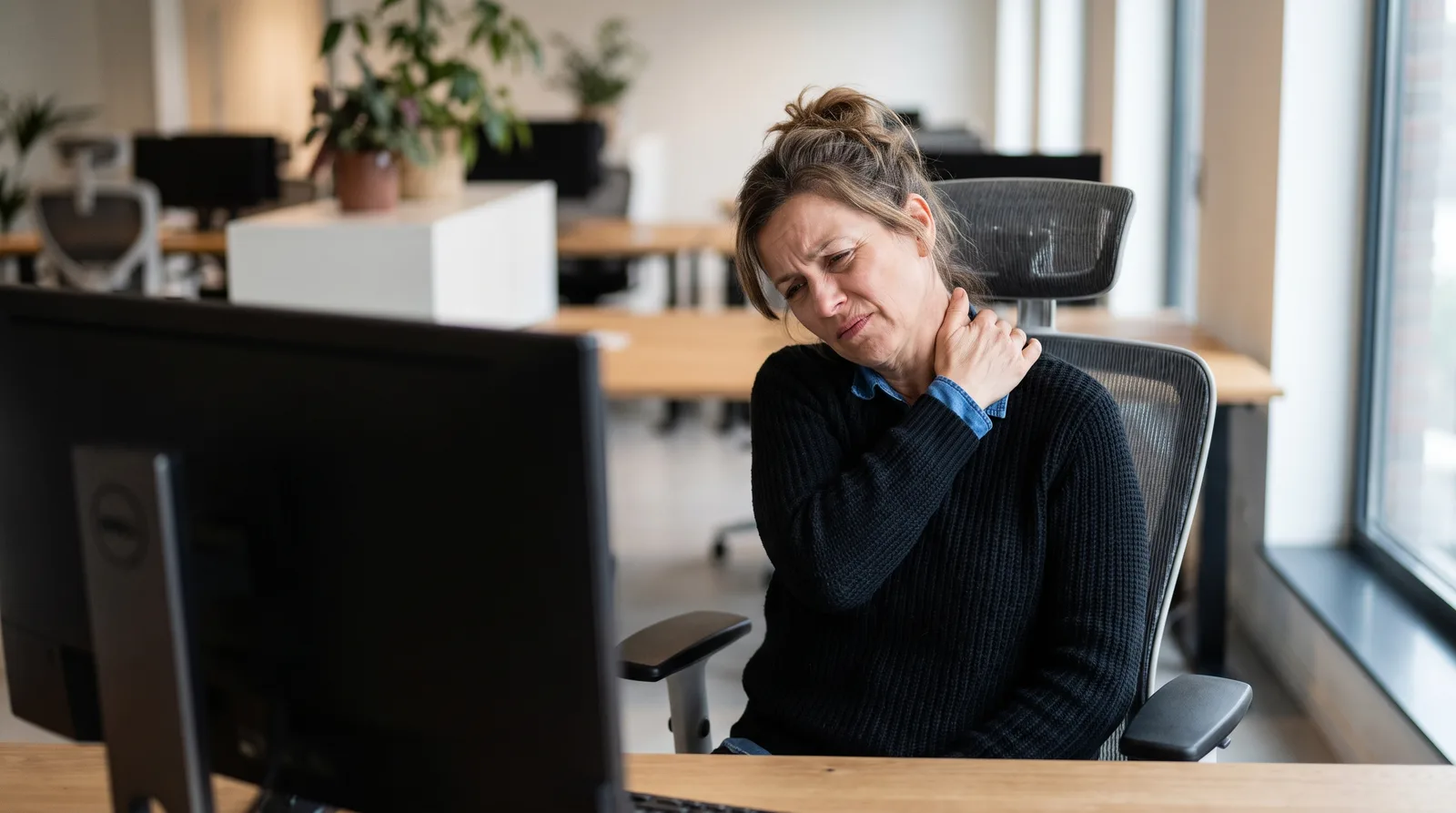
如果你此刻脖子或肩膀正在痠,這裡有第一個奇妙又讓人安心的事實:你一點都不孤單。頸部疼痛是全球數一數二的失能主因——以「失能所致的損失年數」來算,它在全世界排第四,而且光是近期某一年,就大約有 2 億 300 萬人受它所苦(Hoy et al., 2014; GBD 2021 Neck Pain Collaborators, 2024)。我們每年有超過 30% 的人會碰上它(Cohen, 2015)。如果你覺得好像每個人的脖子都在痛,那是因為——差不多真的是這樣。
所以我們來做點有用的事:解釋通常到底發生了什麼、把嚇人的版本拆解掉,並把那些真正需要看醫生的罕見徵兆講得清清楚楚。
讓人放心的真相:它幾乎總是「非特異性」的
醫生把頸部疼痛分成一個簡單的階梯(Guzman et al., 2008)。最上層,是最常見的那種:非特異性或機械性頸部疼痛——一個又痠、又僵、有時很難受的脖子,卻找不到任何一個壞掉的單一結構可以指認。中間,是人數少一些、有神經根被夾到的族群。最底層,是極少數罹患嚴重疾病的人。
我們絕大多數人,都住在這個階梯的最上層。「非特異性」聽起來很不過癮——我們想要一個反派,一個滑脫的這個或卡住的那個——但它其實是好消息:它代表沒有東西壞掉。誠實的樣貌是,日常的脖子痠是多因子的:肌肉緊繃、你動了多少、壓力和情緒、睡眠、整體負荷。它比較不是「某個東西啪一聲斷了」,而更像是「一堆小事疊在一起」。大多數急性發作會自己緩解——不過,講句老實話,將近一半的人會有某種程度的復發(Cohen, 2015)。惱人,是的。危險,幾乎從來不是。
姿勢的劇情大轉折:它不是別人賣給你的那個兇手
接下來,我們要對每一張貼在牆上的海報溫和地說聲不同意。「姿勢不良導致頸部疼痛」這個信念,比它被對待的方式要搖搖欲墜得多。當研究者把探討頭部前傾姿勢的研究匯總起來,有頸部疼痛的成年人確實稍微更常有這種姿勢——但這個關聯很弱,它建立在無法證明因果的快照式資料上,而且在青少年身上,完全沒有任何關聯(Mahmoud et al., 2019)。一篇針對辦公室工作者的回顧發現,支持身體與姿勢因素真的導致頸部疼痛的證據既有限又不一致(Jun et al., 2017)。與此同時,像壓力和低落情緒這類心理社會因素,倒是一再以穩定的預測因子身分出現(Linton, 2000)。
翻譯一下:你的駝背大概是個乘客,不是駕駛。這反而奇妙地讓人鬆一口氣——它代表你可以別再把脖子當成一座脆弱的高塔,好像你一圓肩它就會轟然倒塌。(我們在這裡拆解了更大的「駝背到底壞不壞?」這個問題。)
該認真看待的部分:紅旗徵兆
現在講重要的例外,因為「通常無害」不等於「永遠無害」。有一小部分脖子,是真的在試著告訴你某件事,而這些徵兆值得一位專業人士——不是一篇部落格:
- 手臂症狀: 沿著一隻手臂往下竄的疼痛、麻木、刺麻或無力,可能代表神經根被夾到(Radhakrishnan et al., 1994)。通常會自己緩解,但還是去給人評估一下。
- 脊髓受壓的徵兆: 手變得愈來愈笨拙(扣鈕扣、撿硬幣)、走路或平衡不穩,或是大小便的變化。這一種——退化性頸椎脊髓病變——在早期很容易被忽略,卻是真的很重要、一定要抓出來的(Davies et al., 2018)。
- 全身性紅旗: 不明原因的體重減輕、發燒、怎麼都不會緩解的夜間疼痛、癌症病史,或是一次重大受傷之後才出現的疼痛。
如果上述任何一項符合,別再讀了,去約診。以下所有內容,都是為了那個普通、痠痛的脖子而寫,不是為了這些。
那麼,日常那種脖子痠到底什麼有效?

大多是些不戲劇化的東西——而且顯然不是去買一個完美姿勢:
- 動它、用它。 特定的頸部與肩胛骨運動,確實能改善疼痛與功能(Gross et al., 2015),而且保持活動勝過臥床休養。(我們把證據最好的那些動作整理在這裡。)
- 別在同一個姿勢凍住。 問題通常是連續好幾個小時不動,而不是你不動時停在哪個確切的角度。把它打散。
- 顧到整張圖。 睡眠、壓力和整體活動量全都摻在裡面——只治脖子、把它孤立起來,會漏掉半個故事。
- 讓自己安心。 臨床指引把運動、活動,以及「這通常不嚴重」的衛教放在最前線(Blanpied et al., 2017)。恐懼和過度防護,往往讓疼痛變糟,而不是變好。
誠實的結論
一個痠痛的脖子極其常見,幾乎總是非特異性又良性的,是由一團因素而非某個壞掉的零件所驅動——而且跟你的姿勢有關的程度,遠比那些海報宣稱的少。學會那幾個紅旗徵兆,認真看待它們,至於一般的狀況:持續動、別在同一個姿勢裡醃太久、對自己好一點。
那句「別在同一個姿勢裡醃太久」,正是我們打造 NeckCure 的那道縫。它不會診斷你的脖子,也不能取代臨床醫師,它更絕對不會拿一個連證據都不支持的完美姿勢來對你說教。它只是在你凍在同一個癱姿裡太久時察覺到,然後推你一把去動一動——因為打散那些靜止的時數,正是這裡少數幾件真正有效的事情之一。
參考文獻
- Hoy D, March L, Woolf A, et al. (2014). The global burden of neck pain: estimates from the Global Burden of Disease 2010 studyAnnals of the Rheumatic Diseases. PMID 24482302DOI 10.1136/annrheumdis-2013-204431Neck pain ranked 4th worldwide for years lived with disability — it is genuinely one of the most common causes of everyday suffering. (Modelled estimates.)
- GBD 2021 Neck Pain Collaborators (2024). Global, regional, and national burden of neck pain, 1990-2020, and projections to 2050The Lancet Rheumatology. PMID 38383088DOI 10.1016/S2665-9913(23)00321-1Around 203 million people had neck pain in 2020; burden higher in women; projected to keep rising. The most recent global estimate.
- Cohen SP (2015). Epidemiology, diagnosis, and treatment of neck painMayo Clinic Proceedings. PMID 25659245DOI 10.1016/j.mayocp.2014.09.008Annual prevalence >30%; most acute neck pain settles, but nearly half of people have persistent or recurring symptoms; the majority is 'mechanical'/non-specific with no single structural cause.
- Guzman J, Hurwitz EL, Carroll LJ, et al. (2008). A new conceptual model of neck pain: linking onset, course, and care (Bone and Joint Decade Task Force on Neck Pain)Spine. PMID 18204387DOI 10.1097/BRS.0b013e3181643efbThe standard grading: Grade I–II = no serious pathology (the vast majority), Grade III = nerve-root signs, Grade IV = serious pathology (rare). The basis for 'mostly benign, occasionally nerve, rarely serious.'
- Radhakrishnan K, Litchy WJ, O'Fallon WM, Kurland LT (1994). Epidemiology of cervical radiculopathy: a population-based study from Rochester, Minnesota, 1976 through 1990Brain. PMID 8186959DOI 10.1093/brain/117.2.325Cervical radiculopathy (a pinched nerve root — arm pain/numbness/weakness) is comparatively uncommon (~83 per 100,000/year) and most people recover.
- Mahmoud NF, Hassan KA, Abdelmajeed SF, Moustafa IM, Silva AG (2019). The relationship between forward head posture and neck pain: a systematic review and meta-analysisCurrent Reviews in Musculoskeletal Medicine. PMID 31773477DOI 10.1007/s12178-019-09594-yIn adults, forward-head posture is weakly associated with neck pain; in adolescents there was NO association. Cross-sectional data — association, not proven cause, and confounded by age.
- Jun D, Zoe M, Johnston V, O'Leary S (2017). Physical risk factors for developing non-specific neck pain in office workers: a systematic review and meta-analysisInternational Archives of Occupational and Environmental Health. PMID 28224291DOI 10.1007/s00420-017-1205-3Prospective office-worker data: evidence for most physical/postural risk factors causing neck pain is limited or inconsistent — a key counterweight to the 'bad posture causes it' story.
- Linton SJ (2000). A review of psychological risk factors in back and neck painSpine. PMID 10788861DOI 10.1097/00007632-200005010-00017Psychosocial factors — stress, mood, job satisfaction — are consistently linked to onset and persistence of neck/back pain. Pain is multifactorial, not just mechanical.
- Davies BM, Mowforth OD, Smith EK, Kotter MR (2018). Degenerative cervical myelopathyBMJ. PMID 29472200DOI 10.1136/bmj.k186The serious one to catch: spinal-cord compression. Warning signs include clumsy hands, unsteady gait/balance, and bladder changes — get these assessed promptly.
- Gross A, Kay TM, Paquin JP, et al. (2015). Exercise for mechanical neck disordersCochrane Database of Systematic Reviews. PMID 25629215DOI 10.1002/14651858.CD004250.pub5Specific neck/shoulder-blade strengthening and stretching help pain and function in mechanical neck pain — low-to-moderate quality evidence.
- Blanpied PR, Gross AR, Elliott JM, et al. (2017). Neck pain: Revision 2017 — clinical practice guidelinesJournal of Orthopaedic & Sports Physical Therapy. PMID 28666405DOI 10.2519/jospt.2017.0302Evidence-based guideline: exercise, staying active, and reassurance/education are front-line; screen for red flags. 'Fix your posture' alone is not the headline treatment.