人体工学
人体工学椅和站立式办公桌,真的有用吗?
网络很乐意卖你一张一千美元的椅子和一张电动升降桌来拯救你的背。证据可就没那么热情了。这里告诉你这些东西真正做得到什么、做不到什么,以及那个便宜到能打败两者的东西。
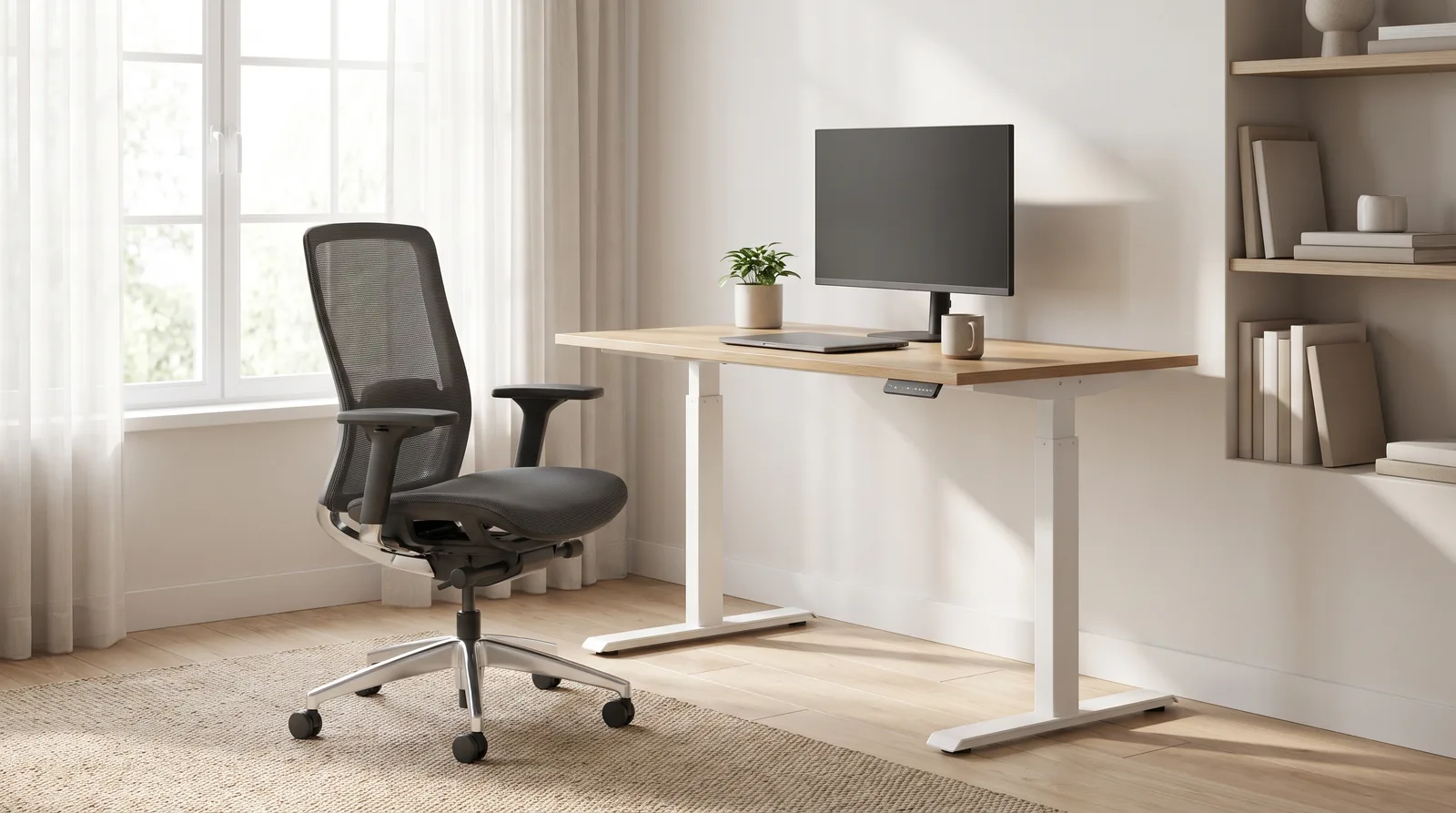
在任何一个购物网站打上“背痛”,一小笔财富就会冒出来:带着十九根拉杆的网布王座、能从坐姿滑顺升到站姿的电动桌、宣称能把你“重新对齐”的靠垫。话术永远是同一套:你的身体正在坏掉,因为你坐错了,而对的装备会把它修好。对任何卖家具的人来说,这是个可爱的故事。证据可暴躁多了。
人体工学椅:有帮助,但不是它被吹嘘的那种解药
先从贵的那个开始。人体工学椅真的能预防背痛和颈痛吗?当研究者把那些随机对照试验汇总起来,答案很泄气:人体工学干预在预防背痛和颈痛上,并不比什么都不做更好(Driessen et al., 2010)。椅子的研究确实找到一些短期、由受试者自述的缓解,但方法站不太住脚,也完全不知道能不能持久(van Niekerk et al., 2012)。而那篇最乐观的近期荟萃分析呢?它找到的疼痛减少大约是10 分量表上的 0.28 分——统计上是真的,临床上却几乎感觉不到——而且在失能上完全没有改善(Santos et al., 2025)。
这不是说“椅子是骗局”。一张像样、可调整的椅子坐起来舒服,也不会害到你。重点是,一张椅子不是一种治疗,而那个四位数的价格标签,买到的是舒适和功能,不是一条经证实能逃离疼痛的出路。
腰靠:它改变的是你的脊椎,未必是你的痛苦
那个人人都发誓有效的腰部凸起呢?这里有一段利落、稍微让人谦卑的科学。腰靠确实做了某件可以测量的事——它增加你下背的弧度(不过有趣的是,它并不会重新摆放你的骨盆)(De Carvalho & Callaghan, 2012)。问题在于那感觉起来如何。在一项研究里,腰靠枕把姿势推得更接近“正确”,也改善了一个客观的舒适度分数——然而坐在上面的人,报告的是在实际舒适感受上没有差别(Grondin et al., 2013)。纸面上更好的姿势,并没有换来一个更开心的背。腰靠有可能合理地降低肌肉负荷(Makhsous et al., 2009),但“我的脊椎变成一个比较漂亮的形状”和“我觉得比较舒服”,是两件顽固地不同的事。
站立式办公桌:它减少坐着的时间,而它被证实的也差不多就这样
站立式办公桌被套上了一圈健康光环,所以我们来精确讲清楚它到底挣到了什么。可靠的发现是:在短期内,一张坐站两用桌把你在工作时坐着的时间,砍掉大约每天 100 分钟(Shrestha et al., 2018)。很好!但同一篇 Cochrane 回顾把“它们能减轻疼痛、改善健康指标或提升生产力”的证据,评为低到极低质量。它们主要做到的是让你离开椅子。站立这件事本身并没有魔法。
还有,拜托别把站着算成运动:站着每分钟比坐着多燃烧大约 0.15 大卡——六小时下来大约多 54 大卡(Saeidifard et al., 2018)。那是“一片饼干”分量的“运动”。整天站着也不会自动比较好;它只是把一个静止的姿势换成另一个。
剧情大转折:真正有帮助的东西是动

接下来,证据突然变得热情起来——而且它跟装备一点关系都没有。在这一批研究里设计最好的那项当中,拿到一个能让他们坐着时轻轻挪动、活动的坐垫的办公室工作者,在六个月里新增的疼痛戏剧性地更少:颈痛掉到 15%(对照组是 65%),下背痛掉到 10%(对照组是 59%)(Channak et al., 2024)。致胜的关键成分不是某个姿势——是动作。
这完美地契合了更大的那张图。长时间坐着跟更差的健康与更高的死亡率有关,而且与你运动多少无关(Biswas et al., 2015)——然而每天大约 60 到 75 分钟的活动,就能抵销掉即使是很久的久坐(Ekelund et al., 2016)。把这两件事合起来读,结论简单到几乎有点失礼:问题从来不是你的椅子不够高级。是你坐着不动太久了。
那么,你到底该怎么花你的钱(和力气)?
- 一张像样、可调整的椅子值得拥有——把高度设到你的脚能平放、屏幕在眼睛的高度。只是别指望它能治好任何东西。
- 站立式办公桌如果能让你动起来,那就不错——拿它来交替,别拿它来八小时僵硬地站着。
- 把大部分的力气花在动作上,不是装备上。 每 20 到 30 分钟站起来、坐不住扭一扭、换个姿势、走一趟去接水。那才是证据最强的部分,而且免费。
什么时候该找人看看
如果你的背痛或颈痛很严重、持续,或越来越糟,或者有麻木、刺痛或无力蔓延到一只手脚,那值得一次正经的评估——而不是一张新椅子。
诚实的结论
人体工学椅和站立式办公桌是舒适工具,不是治疗。椅子在疼痛上几乎拨不动指针,腰靠改变你的姿势多过改变你的感受,而站立式办公桌被证实的唯一一招,就是让你少坐一点。真正能保护你颈背的东西,是打散那份静止——常常地,动。
而这正是 NeckCure 的全部、也是唯一的工作:它不是家具,也不会重塑你的脊椎。它只是盯着看你什么时候冻在同一个姿势里太久,然后推你去动一动——这里唯一一个证据真的为它欢呼的干预,而它的价格大约是那张椅子的零头。
参考文献
- Driessen MT, Proper KI, van Tulder MW, Anema JR, Bongers PM, van der Beek AJ (2010). The effectiveness of physical and organisational ergonomic interventions on low back pain and neck pain: a systematic reviewOccupational and Environmental Medicine. PMID 20360197DOI 10.1136/oem.2009.047548Pooled 10 RCTs: ergonomic interventions were NOT more effective than doing nothing at preventing back or neck pain. The key cold-water finding.
- van Niekerk SM, Louw QA, Hillier S (2012). The effectiveness of a chair intervention in the workplace to reduce musculoskeletal symptoms: a systematic reviewBMC Musculoskeletal Disorders. PMID 22889123DOI 10.1186/1471-2474-13-145Chairs produced some short-term, self-reported symptom relief, but weak randomisation and no long-term follow-up — 'feels better now, unknown later.'
- Santos W, Rojas C, Isidoro R, et al. (2025). Efficacy of ergonomic interventions on work-related musculoskeletal pain: a systematic review and meta-analysisJournal of Clinical Medicine. PMID 40364066DOI 10.3390/jcm14093034Even the optimistic recent meta-analysis (24 RCTs) found only a tiny pain reduction (VAS −0.28) and NO improvement in disability. Small effect, from multi-part programmes — not one pricey chair.
- De Carvalho DE, Callaghan JP (2012). Influence of automobile seat lumbar support prominence on spine and pelvic postures: a radiological investigationApplied Ergonomics. PMID 22280849DOI 10.1016/j.apergo.2011.12.007Lumbar support increases the low-back curve but does NOT change pelvic posture. It reshapes your spine's curve, not your whole sitting position. (Small imaging study, n=8.)
- Grondin DE, Triano JJ, Tran S, Soave D (2013). The effect of a lumbar support pillow on lumbar posture and comfort during a prolonged seated taskChiropractic & Manual Therapies. PMID 23826832DOI 10.1186/2045-709X-21-21A lumbar pillow nudged posture ~2.9° closer to neutral and improved an objective comfort measure — but people did NOT report feeling more comfortable. 'Better posture' ≠ 'feels better.'
- Makhsous M, Lin F, Bankard J, Hendrix RW, Hepler M, Press J (2009). Biomechanical effects of sitting with adjustable ischial and lumbar support on occupational low back painBMC Musculoskeletal Disorders. PMID 19193245DOI 10.1186/1471-2474-10-17An 'off-loading' seat setup lowered back-muscle activity and shifted load off the sitting bones — mechanistically plausible help, but framed as potential, not proven pain relief.
- Shrestha N, Kukkonen-Harjula KT, Verbeek JH, Ijaz S, Hermans V, Pedisic Z (2018). Workplace interventions for reducing sitting at workCochrane Database of Systematic Reviews. PMID 29926475DOI 10.1002/14651858.CD010912.pub4Sit-stand desks cut workplace sitting by roughly 100 minutes/day short-term — but evidence for effects on pain, health and productivity is low-to-very-low quality. Their proven job is 'less sitting,' not 'less pain.'
- Saeidifard F, Medina-Inojosa JR, Supervia M, et al. (2018). Differences of energy expenditure while sitting versus standing: a systematic review and meta-analysisEuropean Journal of Preventive Cardiology. PMID 29385357DOI 10.1177/2047487317752186Standing burns only ~0.15 kcal/min more than sitting — about 54 extra calories over a 6-hour day. Standing is not exercise.
- Channak S, Speklé EM, van der Beek AJ, Janwantanakul P (2024). The effectiveness of a dynamic seat cushion in preventing neck and low-back pain among high-risk office workers: a 6-month cluster-randomized controlled trialScandinavian Journal of Work, Environment & Health. PMID 39169894DOI 10.5271/sjweh.4184The strongest study here. A cushion that kept people gently moving cut new neck pain to 15% (vs 65%) and low-back pain to 10% (vs 59%). Movement beat a static chair.
- Biswas A, Oh PI, Faulkner GE, et al. (2015). Sedentary time and its association with risk for disease incidence, mortality, and hospitalization in adults: a systematic review and meta-analysisAnnals of Internal Medicine. PMID 25599350DOI 10.7326/M14-1651More sedentary time is linked to higher mortality and disease risk — independent of how much you exercise. The problem is the sitting itself. (Observational — association.)
- Ekelund U, Steene-Johannessen J, Brown WJ, et al. (2016). Does physical activity attenuate, or even eliminate, the detrimental association of sitting time with mortality?The Lancet. PMID 27475271DOI 10.1016/S0140-6736(16)30370-1In >1 million people, ~60–75 minutes of daily moderate activity offset the mortality risk of long sitting. The fix is moving, not a fancier way to sit still.