Yoga
Yoga's oldest rule isn't a pretzel pose. It's a straight spine, and the payoff is real
Before the fancy poses, before the flexibility, yoga's very first instruction was blunt: sit up, spine tall. The old texts wrapped it in mystical language, but modern research keeps confirming the plain part, an upright spine breathes better, feels calmer, and thinks with more confidence. Here's the payoff, one claim at a time.
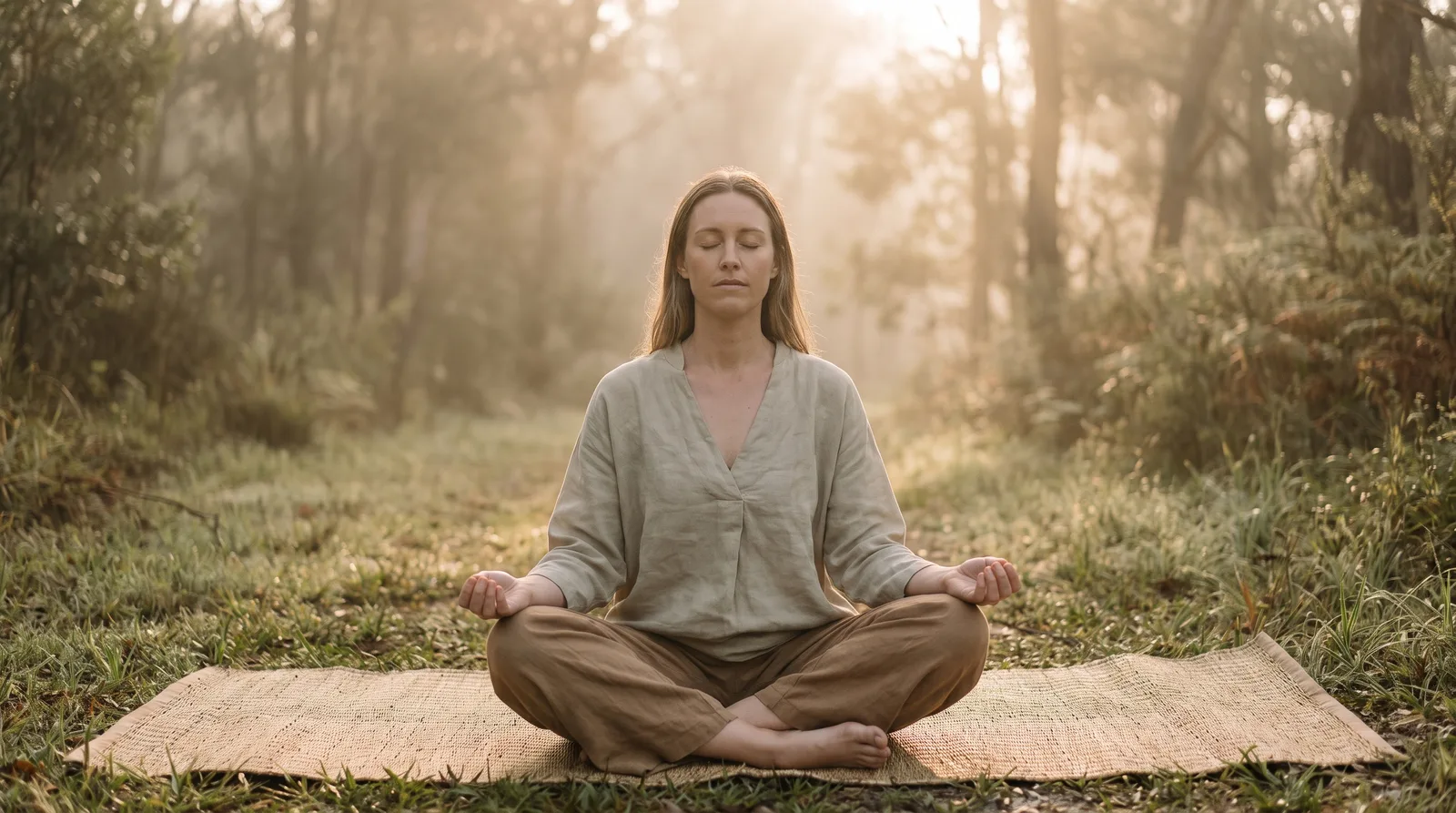
When most people picture yoga, they picture the shapes: a body folded into an impossible pretzel, a leg behind the head, someone balanced serenely on their hands. But if you go back to the oldest texts, you find something almost disappointingly plain sitting at the very bottom of the whole tradition. Before the flexibility, before the shapes, yoga’s first instruction was blunt: sit up, spine tall.
For thousands of years, yoga has been quietly obsessed with the upright spine. The exotic theory it wrapped that around is a great hook, so let’s start there. But the real point, the part worth keeping, is what an un-slouched spine actually does for you. And on that, modern research has plenty to say.
Yoga’s oldest rule (the theory, in one minute)
Around 1,700 years ago, a sage named Patanjali compiled the Yoga Sutras, the foundational rulebook of yoga. In it he defines asana, the physical posture or “seat,” exactly once, in three famous Sanskrit words: the posture should be “steady and comfortable” (sthira sukham asanam, where sthira means steady or stable and sukha means comfortable or easeful). That’s it. Yoga’s entire definition of posture is a seat that is upright, stable, and at ease. Everything else in the practice is built on top of that erect foundation.
The Bhagavad Gita, an even older sacred poem, is just as direct. Its meditation instruction: “hold the body, head and neck straight (samam) and steady, motionless.” Head stacked over neck, neck over spine, spine long. It reads like a modern posture coach, minus about two thousand years.
Why the fixation on the spine? Because of a beautiful old idea. In yoga’s traditional map of the body, an invisible central channel called the sushumna nadi is said to run straight up the spine, from the base to the crown of the head. Threaded along it sit the chakras (energy centres), and up through it rises prana (life-energy, roughly, “the breath of life”). The teaching is simple: slump, and you kink the channel; sit tall, and you keep it open. The spine, in this view, is the mast the whole system hangs from.
That’s the theory. It’s gorgeous, and, as we’ll be honest about below, it isn’t anatomy. But here’s the surprise: strip the mysticism away, and the plain instruction underneath, don’t slouch, turns out to buy you real, measurable things. That’s the main event. Let’s take the payoffs one at a time.
Payoff 1: you breathe better
If yoga is obsessed with anything more than the spine, it’s the breath. A whole limb of the practice, pranayama, is devoted to breath control. So the tradition’s logic runs: erect spine, open channel, free breath.
Set the mystical channel aside, and there’s something very concrete underneath. When you slump, you physically crush your diaphragm and rib cage, the machinery that pulls air in. And it’s been measured. In one study, the same people had measurably weaker respiratory muscles sitting slouched than sitting upright (Albarrati et al., 2018). Collapsing forward jams the very muscle that drives your breath. A tall spine opens the chest, and a fuller breath simply follows. Yoga said the upright spine frees the breath; modern mechanics agree, for reasons that have nothing to do with energy and everything to do with room for your lungs.
Payoff 2: you feel calmer and steadier
Yoga never treated posture as merely physical. A steady spine was meant to steady the mind, that’s the whole reason the Gita prescribes it for meditation. Sit collapsed and agitated, the thinking goes, and your inner state follows your outer one.
That sounds like poetry, but it’s exactly the kind of thing modern research can test. In a randomised trial, people held in an upright posture reported higher self-esteem, better mood, and less fear under stress than slumped participants (Nair et al., 2015). Your body posture loops back and colours your mental state. Yoga said an erect spine calms the mind; the trial found upright people genuinely felt better and more resilient under pressure. Not mysticism, just the surprisingly two-way street between body and mood.
Payoff 3: you trust your own mind more
There’s a quiet confidence to the classic seated yogi, spine like a column, unbothered. The tradition frames the upright seat as the posture of a settled, self-possessed mind.
Here, too, the lab has caught up. In one clever experiment, simply sitting up straight increased how much confidence people placed in their own thoughts, compared with slumping (Briñol et al., 2009). Sit tall while you think a thought, and you’re more likely to believe it. Yoga said the erect spine seats a steady mind; the research found upright posture literally strengthens your conviction in what you’re thinking.
The honest part: what’s real, and what’s just tradition
We owe you a clear line here, because yoga comes wrapped in exotic-sounding ideas, and it’s easy to let the poetry oversell the science. Prana, nadis, chakras, the sushumna, kundalini, these are traditional “subtle-body” concepts, not proven anatomy or medicine. There is no measurable energy channel in your spine. Sitting up straight does not literally open a mystical conduit, raise vital energy, unlock chakras, grant powers, or cure disease. If anyone promises you that, they’re selling something.
What’s genuinely striking is what’s left standing once you set all of that aside. A tradition thousands of years old fixed on one plain instruction, don’t slump, keep the spine erect, and three of the things it promised (easier breathing, a calmer mind, steadier confidence) turn out to have real modern evidence behind them. The metaphysics is unproven. The posture advice is excellent.
So how do you actually do it?
You don’t need to learn a single pose, or believe a word about prana, to borrow yoga’s core cue. Sit or stand, and imagine the crown of your head being gently lifted toward the ceiling, as if by a thread. Let the spine grow long beneath it. Chin settles slightly back, shoulders drop, chest opens. Steady, but not stiff, remember Patanjali: steady and comfortable.
Try it right now, while you’re reading. That’s the whole technique. It’s been the first lesson for a couple of thousand years for a reason.
The bottom line (and where we fit)
The payoffs are real and they’re free: a fuller breath, a calmer mood, more confidence in your own thinking. The catch is the same one every meditator has always faced, remembering to do it, especially slumped at a desk where your head drifts forward by the hour and your spine quietly caves.
That’s the narrow job NeckCure does. It uses your webcam to notice when your head creeps forward and your spine slumps, and nudges you back toward that long, lifted-crown posture the old texts were pointing at all along. It won’t make you a yogi, and it makes no claims about energy channels. It just helps you hold the one upright posture yoga put first, more often, so you can quietly pocket the benefits above.
(This is an article about yoga’s history and philosophy, and about posture, not medical advice. If you have back or neck pain or a diagnosed spinal condition, check with a health professional before starting any new practice.)
References
- Patanjali, Yoga Sutras (Yoga Sutras of Patanjali), 2.46 (350). Sthira sukham asanam (sutra 2.46)Classical Indian yoga text (Sanskrit). SourceYoga's entire definition of posture, in three words: the seat should be 'steady and comfortable' (sthira sukham asanam). Asana is named only once in the whole text; a stable, erect, easeful seat is the foundation.
- Bhagavad Gita, Chapter 6, Verse 13 (-100). Samam kaya-siro-grivam (6.13)Classical Indian scripture (Sanskrit). SourceKrishna's meditation instruction: 'hold the body, head and neck straight (samam) and steady, motionless'. A direct, ancient instruction to keep the spine erect.
- Hatha Yoga Pradipika and the yogic nadi tradition (1450). Sushumna nadi, the central channel of the spineClassical Indian yoga tradition (Sanskrit). SourceIn yoga's subtle-body model the sushumna is the central channel running up the spine from base to crown, with the chakras strung along it and prana said to rise through it. NOTE: nadis, chakras and prana are traditional concepts, not validated anatomy.
- Albarrati A, Zafar H, Alghadir AH, Anwer S (2018). Effect of upright and slouched sitting postures on the respiratory muscle strength in healthy young malesBioMed Research International. PMID 29682532DOI 10.1155/2018/3058970The breathing payoff. Respiratory-muscle strength was measurably lower slouched than upright; slumping cramps the diaphragm.
- Nair S, Sagar M, Sollers J 3rd, Consedine N, Broadbent E (2015). Do slumped and upright postures affect stress responses? A randomized trialHealth Psychology. PMID 25222091The mood payoff. People held upright reported higher self-esteem, better mood and less fear than slumped participants.
- Briñol P, Petty RE, Wagner B (2009). Body posture effects on self-evaluation: a self-validation approachEuropean Journal of Social Psychology. DOI 10.1002/ejsp.607Sitting upright increased the confidence people placed in their own thoughts, versus a slumped posture.