Posture Coach
How long is too long to sit? Your app draws the line at 50 minutes, and the research explains why
It isn't just how many hours you sit, it's how long you go without getting up. The research ties long, unbroken sitting bouts to real risk, and points to breaking things up well before the hour mark. Here is what the numbers say, and how your app turns them into a line you can actually see.
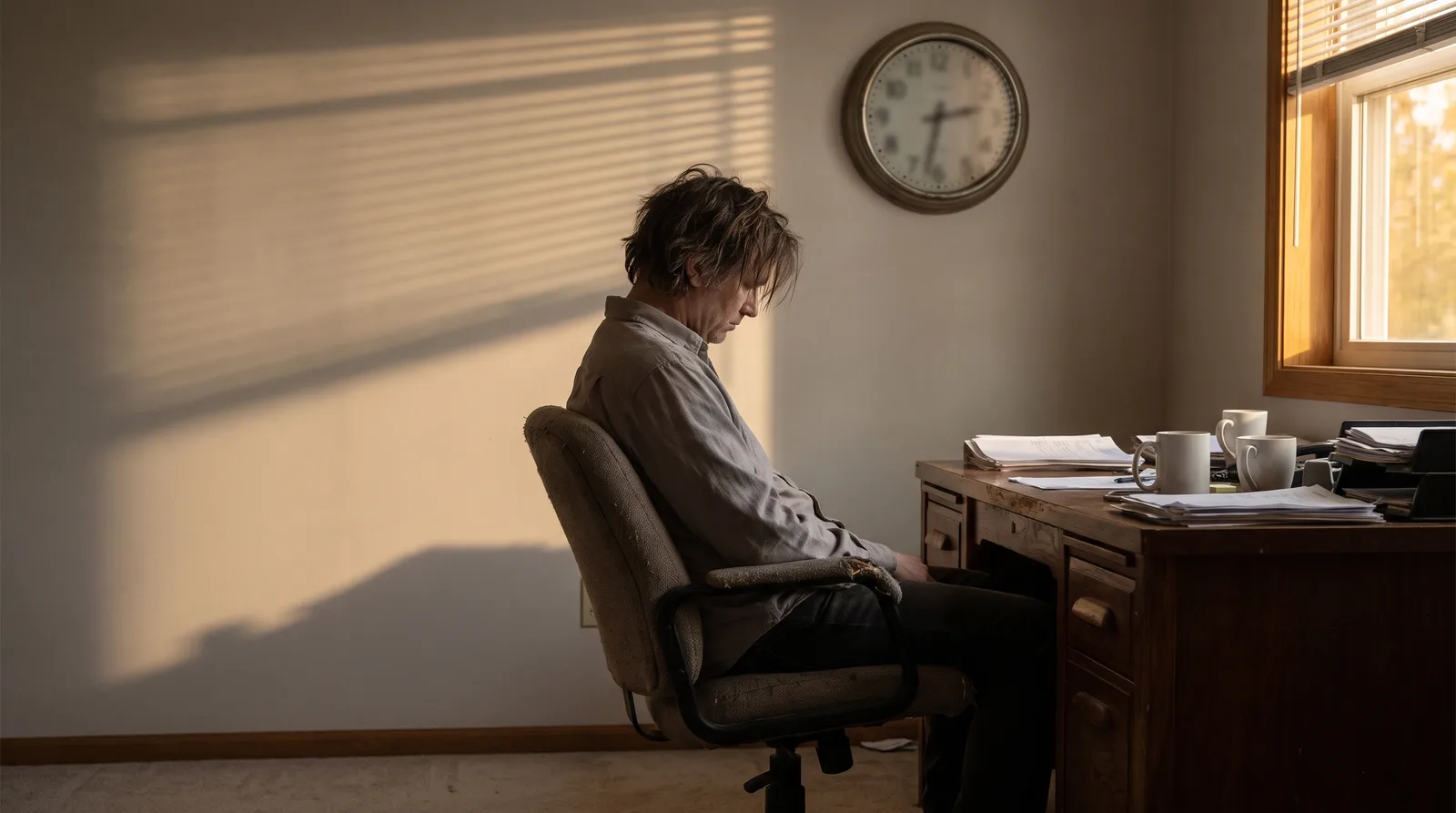
“Sitting is the new smoking” is a great headline and a bad fact, it wildly overstates the case. But buried under the hype is something real and genuinely useful, and it’s more specific than “sitting is bad.” The thing that matters most isn’t only how many hours you sit in a day. It’s how long you sit without getting up. The unbroken stretch is the villain, and that’s a problem you can actually do something about.
What the research actually found
The study worth knowing is Diaz and colleagues, 2017, which tracked nearly 8,000 adults with motion sensors instead of relying on what people guessed about their own sitting. Two things predicted a higher risk of dying: the total amount of sedentary time, and, independently, how much of it came in long, uninterrupted bouts. People whose sitting was broken into short pieces fared best; people who sat a lot and in long unbroken blocks fared worst, with roughly double the risk at the extreme (Diaz et al., 2017).
That “independently” is the important word. Two people can sit for the same total hours, but the one who never gets up is worse off than the one who keeps interrupting it. Same total, different pattern, different outcome.
Now the honest counterweight, because the doom stories skip it: exercise helps a lot. A huge harmonised analysis of over a million people found that about 60-75 minutes a day of moderate activity offset much of the mortality risk associated with long sitting (Ekelund et al., 2016). So this isn’t “you’re doomed if you have a desk job.” It’s “long unbroken sitting is a real risk factor, and both moving during the day and exercising overall push back on it.”
So how long is too long?
Here’s the practical translation. The Diaz data suggests the danger climbs with bouts beyond roughly 30 minutes, and that the people who did best kept their sitting in shorter pieces. In other words, the science says: start breaking things up well before the hour mark.
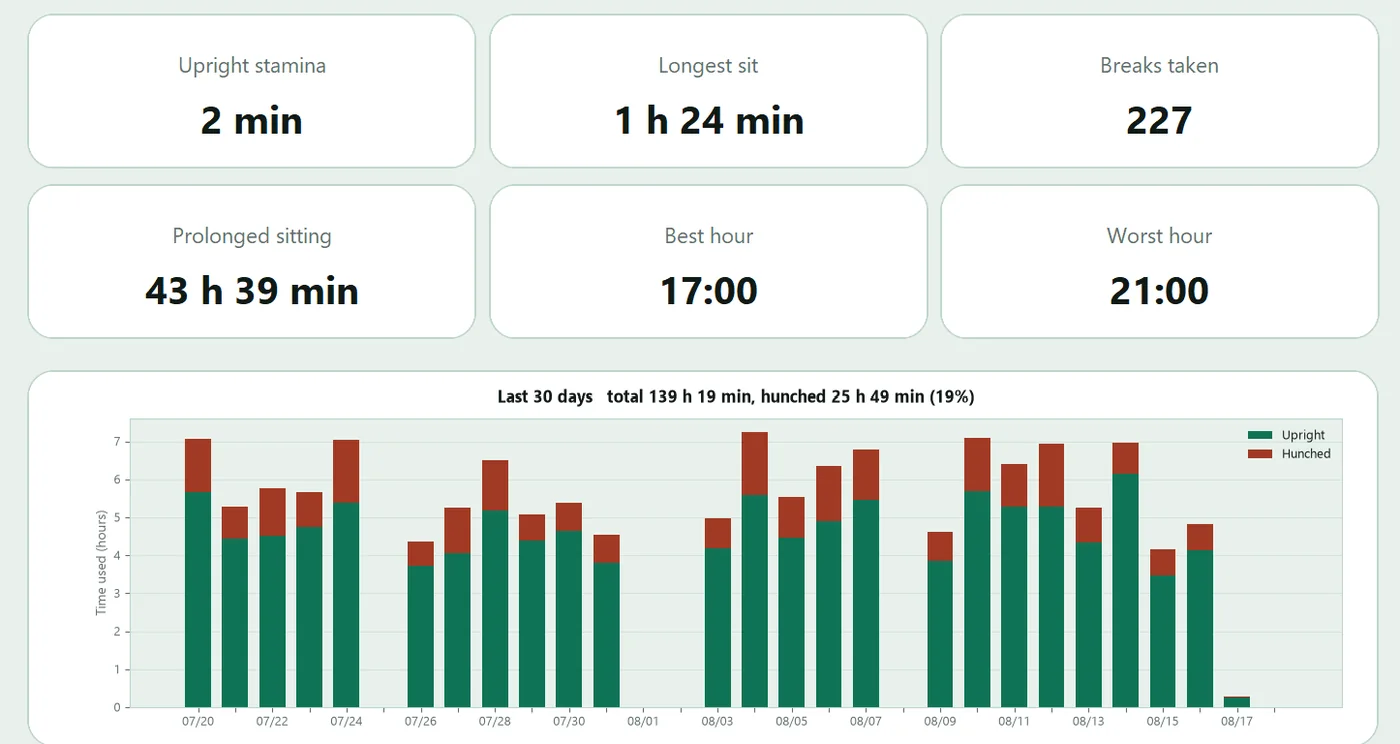
That’s exactly the line your app draws for you. NeckCure flags a single continuous sit of 50 minutes as “prolonged”, its clear you have definitely sat too long now marker (and it counts getting up for 5 minutes or more as a real break). Read the research and the app together and the coaching is simple: 50 minutes is the outer limit, not the target. Aim to stand up around every 30 minutes; treat the app’s 50-minute flag as the backstop you should rarely hit.
Why a break does so much
It seems too easy that simply standing up could matter. But the body really does respond to the interruption itself. In a controlled trial, breaking up sitting with short activity breaks every 20 minutes measurably lowered blood glucose and insulin compared with sitting straight through, for the same total sitting time (Dunstan et al., 2012). The break isn’t just a posture reset; it nudges your metabolism in a healthier direction. Your muscles, switched on even briefly, start clearing sugar from your blood again.
This is why “I’ll just power through and take one big break later” is the wrong trade. One 50-minute block is metabolically worse than two 25-minute blocks with a stand in between, even though the clock says the same thing. It’s the unbroken part that costs you.
The coach’s move
- Get up before the 50-minute flag, ideally every 30. You don’t need a workout, standing up, a lap to the kitchen, twenty seconds of movement all count as breaking the bout.
- Watch your longest-sit number, not just your total. Your app shows both. If your total is fine but your longest continuous sit keeps creeping past 50 minutes, that’s the pattern to fix.
- Still exercise. Breaks during the day and a genuine workout habit are two different protections, and the evidence (Ekelund et al., 2016) says you want both. Breaking up sitting is not a substitute for exercise, or vice versa.
The honest part
Let’s keep this in proportion. One long meeting will not hurt you, and no single afternoon of sitting is a catastrophe, this is about a pattern repeated over years, not a verdict on today. The research is largely observational, so it shows sitting patterns travelling with risk rather than proving every mechanism. And “sitting is the new smoking” remains an exaggeration. What’s solid and worth acting on is modest and clear: long, unbroken sitting is a real risk factor, breaking it up helps, and staying otherwise active helps a lot.
The bottom line (and how the app helps)
How long is too long? Push past about 30 minutes and you’re heading into the zone the research flags; hit a continuous 50 minutes and your app is right to call it prolonged. The fix isn’t to fear your chair, it’s to interrupt it, often, before the block gets long.
That’s the job NeckCure does in the background. It tracks your sitting sessions, your longest unbroken sit, and how often you actually get up, so the pattern that matters, not just your daily total, becomes something you can see and steer. The app draws the line; you take the 30-second walk that keeps you on the right side of it.
(This is a popular posture-coaching article about sedentary behaviour, not medical advice. If you have a specific health condition or concern about prolonged sitting, please consult a qualified health professional.)
References
- Diaz KM, Howard VJ, Hutto B, Colabianchi N, Vena JE, Safford MM, Blair SN, Hooker SP (2017). Patterns of Sedentary Behavior and Mortality in U.S. Middle-Aged and Older Adults: A National Cohort StudyAnnals of Internal Medicine. PMID 28892811DOI 10.7326/M17-0212The key study on how you sit, not just how much. Both total sedentary time and long uninterrupted bouts predicted death; risk was lowest for people whose sitting came in short bouts (under ~30 min), and highest for those with lots of sitting AND long unbroken bouts.
- Ekelund U, Steene-Johannessen J, Brown WJ, Fagerland MW, Owen N, Powell KE, Bauman A, Lee IM (2016). Does physical activity attenuate, or even eliminate, the detrimental association of sitting time with mortality?The Lancet. PMID 27475271DOI 10.1016/S0140-6736(16)30370-1The honest counterweight. In a harmonised meta-analysis of over a million people, about 60-75 minutes a day of moderate activity offset much of the mortality risk of long sitting, exercise helps a lot, though very high sitting still carried some risk.
- Dunstan DW, Kingwell BA, Larsen R, Healy GN, Cerin E, Hamilton MT, Shaw JE, Bertovic DA, Zimmet PZ, Salmon J, Owen N (2012). Breaking up prolonged sitting reduces postprandial glucose and insulin responsesDiabetes Care. PMID 22374636DOI 10.2337/dc11-1931Why breaks work. Interrupting sitting with short activity breaks every 20 minutes measurably lowered blood glucose and insulin versus sitting straight through, the same total time, a kinder metabolic result just from breaking it up.