Posture Correctors
Do posture correctors work? Honestly: they work until you take them off
That strap that yanks your shoulders back feels like an instant fix. But the research on posture correctors keeps landing on the same awkward finding: they change your posture while you wear them, and not much once you don't. Here is why, and what actually carries over.
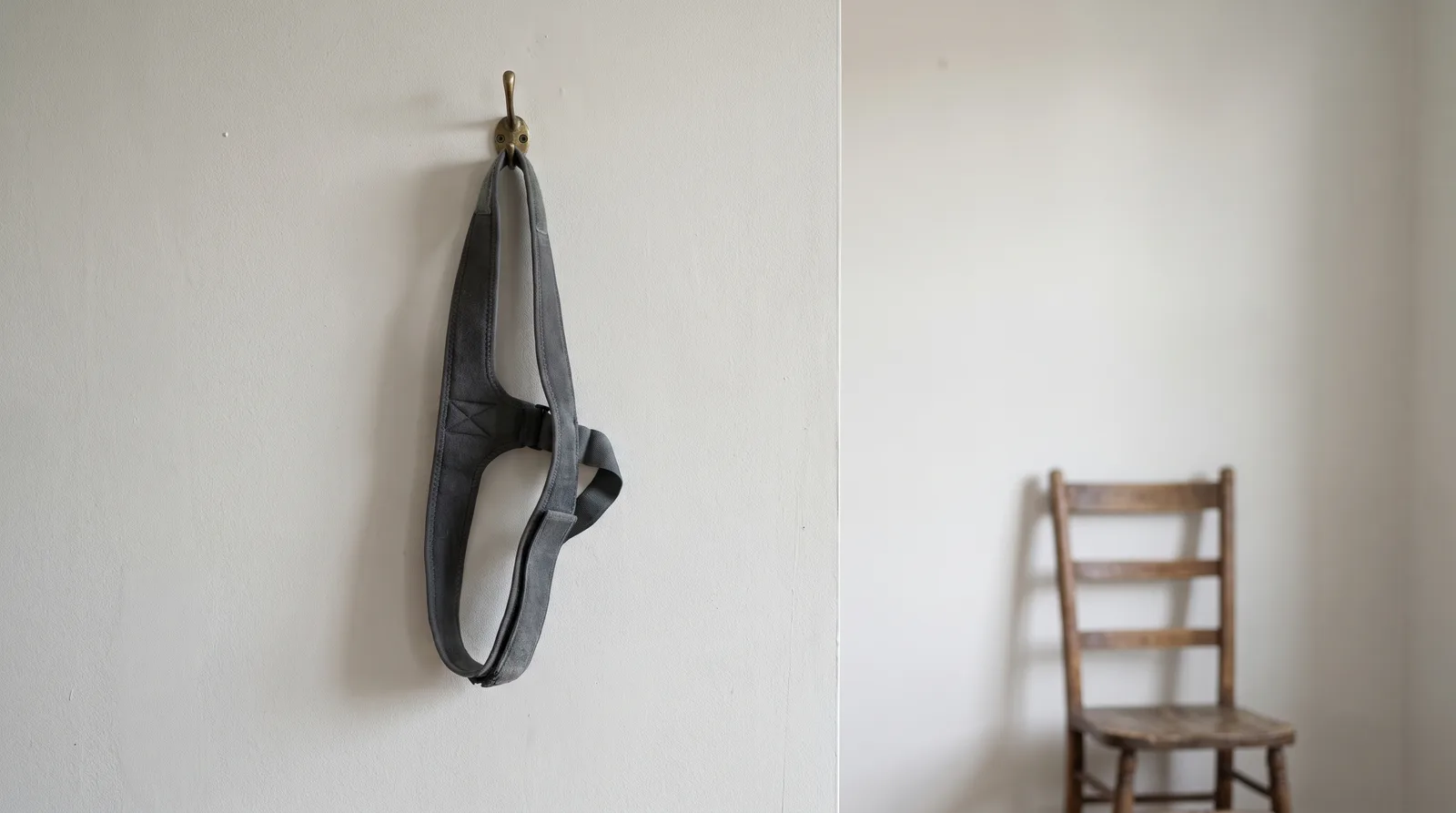
The pitch is almost irresistible. You clip on a strap, or pull on a snug “posture shirt,” and instantly your shoulders are hauled back and your chest is open. You look, in the mirror, fixed. For twenty dollars and zero effort, decades of hunching undone in a single click.
So do they work? The honest, slightly annoying answer is: yes, exactly while you are wearing one, and mostly not after. That gap between “while worn” and “after” is the whole story, and understanding it tells you far more about how posture actually changes than any product page will.
What the research actually found
Someone put posture garments to the test. Manor and colleagues, 2016, measured rounded-shoulder and forward-head posture in college students wearing a corrective “posture shirt.” The verdict the authors reached is worth quoting in spirit: there is little evidence that corrective garments actually alter posture, whereas hands-on therapy and exercise have been shown to improve it. The garment can tug you into a better shape in the moment. That is not the same as changing the posture you keep.
You see the same pattern with postural taping, tape stuck across the upper back to pull the shoulders down. In a randomized trial, Augustsson and colleagues, 2022, found it affected forward head posture and pain in the short term, that is, while the tape was doing the pulling. Passive external correction works passively and externally. Take the support away, and the effect tends to go with it.
Why “take it off and you slouch again” is not a fluke
Here is the mechanism, and it is almost obvious once you say it out loud. A corrector works by doing the holding for you. The strap supplies the force that keeps your shoulders back. But that means the muscles that are supposed to hold you up get to clock off. They are being carried.
Posture is not a shape you own, it is a habit your muscles run. And a habit is built by practicing it, by your own muscles doing the work, over and over, until the pattern becomes the default. A brace lets you skip the practice. So the moment it comes off, there is nothing new underneath: the same under-trained muscles, the same old default, and your shoulders roll right back forward. You didn’t learn anything. The strap did.
There is also a longer-term worry with leaning on passive support: muscles that are rarely asked to work tend not to get stronger, and can drift the other way. The strap that was meant to fix you can quietly make you a little more dependent on the strap.
What actually carries over
Now the good news, because “correctors don’t rewire you” is only half the message. Something does.
Active training does. When you make your own muscles do the correcting, repeatedly, the change sticks, because now the practice is happening. In a randomized controlled trial, Argyrou and colleagues, 2025, ran people through an exercise program built on motor-learning principles and produced a measurable, retained improvement in head posture, on the order of 7.5 degrees of craniovertebral angle. Not a shape held by a device. A shape the person could now hold themselves.
Zoom out and the pattern holds up. A 2025 systematic review of randomized trials (Norasteh et al.) found that exercise, especially retraining the deep neck muscles, is the approach with actual evidence behind it for forward head posture. The theme is consistent across the literature: what lasts is the training you do, not the support you wear.
The honest part
To be fair to the humble strap: it is not useless. As a short-term cue, a reminder you can feel, a corrector can be genuinely helpful, especially early on when you have no sense of where “upright” even is. Some people use one for twenty minutes to learn the feeling, then take it off and try to reproduce it. Used that way, as a temporary teacher rather than a permanent crutch, it has a place.
What it is not is a fix. Wearing a brace all day, forever, is not “improving your posture”, it is outsourcing it, and the bill comes due the moment you take it off. Anyone selling a garment as a permanent posture cure is selling you the part that stops working at the clasp.
The bottom line (and where we fit)
Do posture correctors work? For the length of time they are on your body, sure. As a lasting change, the evidence says no, and the reason is that they do the work your muscles were supposed to learn to do.
This is exactly the line NeckCure is built along, and it is a real distinction, not a slogan. NeckCure is not a brace. It never holds you. It uses your webcam to notice when your head drifts forward and your back rounds, and then it nudges you to straighten, so the correction is done by your own muscles, every time. That is the active practice the research says actually carries over, not the passive support the research says doesn’t.
We will keep it honest about our own limits, too: a nudge is still an external prompt, and the real goal is for the upright feeling to become yours, so eventually you catch the slump before we do. A corrector holds your shoulders back for you. The better aim is to build the you that holds them back without anything at all.
(This is a popular article about posture and posture-correction products, not medical advice. If you have back or neck pain, a diagnosed spinal condition, or any other symptom, please consult a qualified health professional.)
References
- Manor J, Hibberd E, Petschauer M, Myers J (2016). Acute Effects of Posture Shirts on Rounded-Shoulder and Forward-Head Posture in College StudentsJournal of Sport Rehabilitation. PMID 27705072DOI 10.1123/jsr.2014-0304The core finding on wearable correctors. The authors note there is little evidence that corrective garments alter posture, while manual therapy and exercise have been shown to improve it.
- Augustsson SR, Reinodt S, Sunesson E, Haglund E (2022). Short-term effects of postural taping on pain and forward head posture: a randomized controlled trialBMC Musculoskeletal Disorders. PMID 35183157DOI 10.1186/s12891-022-05083-5Passive external correction (here, tape) can affect posture and pain in the short term, i.e. while it is applied, not as a lasting rewire.
- Argyrou S, Kitixis P, Dimitriadis Z, Christakou A, Strimpakos N, Paras G, Tsioutsoumaka M, Kapreli E (2025). The Effectiveness of an Exercise Program Based on Motor Learning Principles for the Correction of the Forward Head Posture: A Randomized Controlled TrialBrain Sciences. PMID 40867204DOI 10.3390/brainsci15080873What actually carries over. Active, motor-learning-based exercise produced a measurable, retained improvement in head posture (about 7.5 degrees of craniovertebral angle).
- Norasteh AA, Karimi K, Faraji S, Ejlali F, Alghosi M, Alimoradi M, Zarei H (2025). Exercise therapy to improve cervical proprioception in individuals with asymptomatic forward head posture: A systematic review of randomized controlled trialsPLoS One. PMID 40966220DOI 10.1371/journal.pone.0330665Systematic review of RCTs: exercise, especially neuromuscular re-education of the deep neck muscles, is the intervention with evidence behind it for forward head posture.