Neck pain
Your stiff neck isn't your pillow's fault: here's what's really going on
You've bought a pillow drawer's worth of foam and your stiff neck STILL returns. Here's the funny (and slightly annoying) truth about what's really going on, with actual science, not vibes.

Let’s have a moment of silence for the pillows.
The memory-foam one. The “ergonomic” one shaped vaguely like a croissant. The buckwheat one that rustled like a snack bag every time you rolled over. The cooling-gel one that was cold for exactly nine minutes. You bought them all in good faith, brave soldiers in your personal war against the stiff neck that ambushes you every few weeks, and they now live, retired and defeated, at the back of your closet.
Here’s the twist worth the price of admission: the pillow was never the villain. You’ve been interrogating the wrong suspect this whole time. The real culprit clocks in hours before bed, and it’s been hiding in plain sight, roughly at arm’s length, glowing.
Your head is a bowling ball on a stick
Start with the absurd fact that your body deals with all day: your head weighs about as much as a bowling ball, and it’s balanced on top of your neck like a scoop of ice cream on a very determined cone.
Hold that bowling ball straight up and your neck muscles barely break a sweat. But tip it forward to read your phone, and those muscles have to haul against gravity to stop your head faceplanting into your chest. Researchers ran the numbers and estimated the effective load climbs steeply the further you crane down, from a few kilograms looking straight ahead to several times that in a full phone-hunch (Hansraj, 2014). Fair warning: that famous study was math-on-paper, not a bathroom scale wedged into someone’s spine, and it’s been dinged for it. But the gist holds up in the real world too: hook teenagers up to sensors while they slump over a phone game and their head-tilt, neck-muscle activity, and calculated load all creep up together (Dandumahanti & Subramaniyam, 2023).
Now do that for eight hours. Then act surprised when your neck files a complaint.
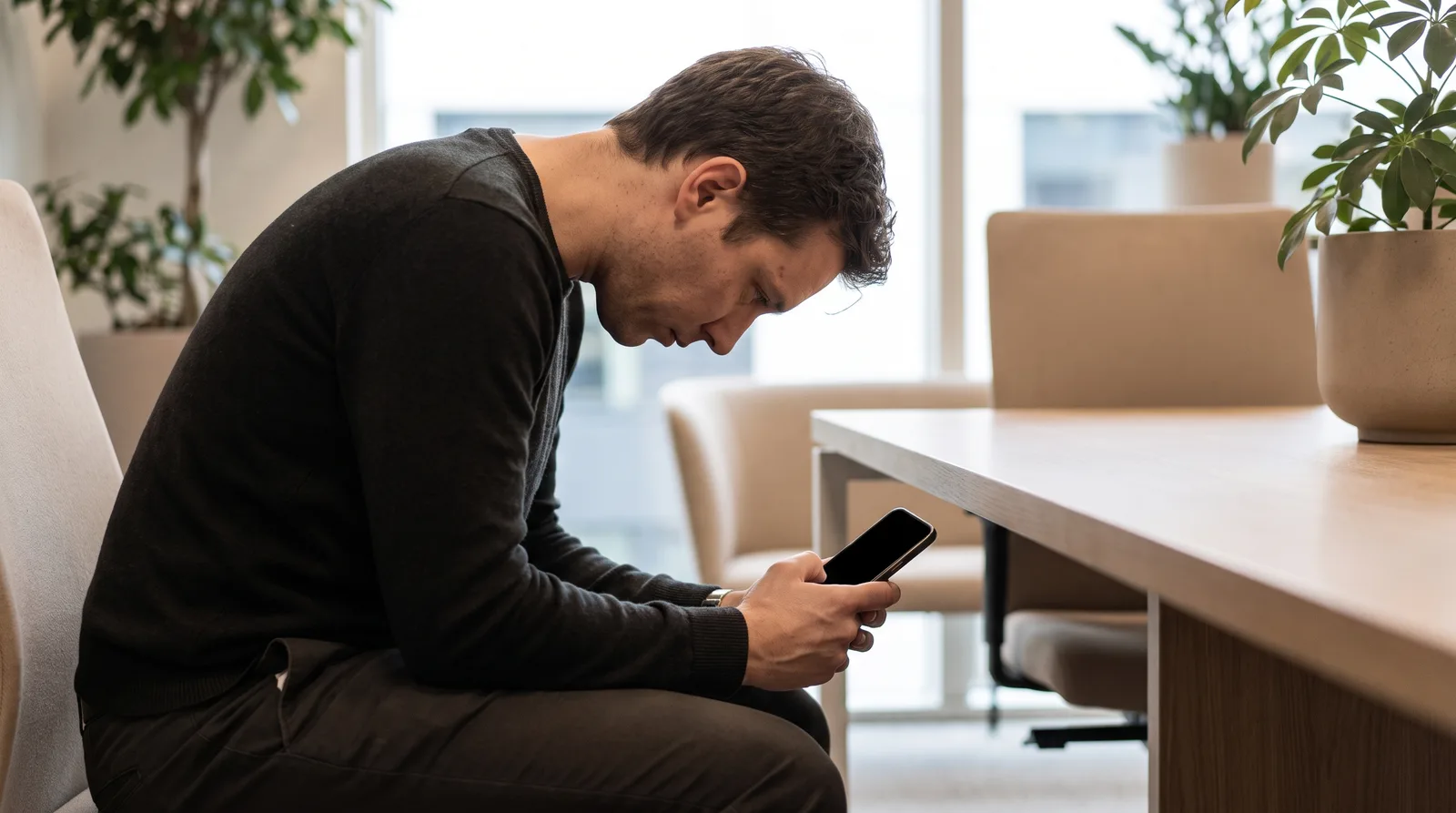
The jelly donuts in your spine
Between the bones of your spine sit the discs: think squishy jelly donuts that stop your vertebrae from grinding together. Bend forward and you squeeze one edge of the donut more than the other.
We know this for a fact in the lower back, because at some point a heroic volunteer let scientists put a pressure sensor inside a living disc and then bend forward: pressure went up (Wilke et al., 1999). (Whoever you are: science owes you a fruit basket.) The neck is much harder to measure in living people, so here we lean on cadaver studies, which show that bending the neck forward shoves the internal stress toward the front of the disc (Skrzypiec et al., 2007). Translation: a long day of looking down doesn’t just tire the muscles; it plausibly changes how the whole structure shares the load.
Plot twist: scientists aren’t fully sold on “text neck” either
Now, this is the part where a lazy blog would grab you by the collar and scream that your posture is DESTROYING YOUR SPINE. We’re not going to do that, because the science is more chill than the headlines.
When researchers rounded up all the “text neck” studies and actually scrutinised them in 2023, their verdict was refreshingly humble: there’s still no consistent evidence that the posture by itself causes neck pain (Grasser et al., 2023). Pain is a drama queen: sleep, stress, how much you move in general, and plain bad luck all get a speaking role.
That said, heavy phone use is linked to a meaningfully higher chance of neck pain across loads of studies (Chen et al., 2025). So posture isn’t the convicted mastermind. It’s more of a person of interest, one who happens to be the easiest to actually do something about.
The goal isn’t to sit bolt upright like you’re being inspected by a sergeant. There’s no single “correct” pose you must lock into. The trouble is staying frozen in one loaded position for hours without noticing.
Why it keeps coming back (the sequel nobody asked for)
Here’s the genuinely annoying part. Most bouts of stiff, acute neck pain do settle down within a couple of weeks. But they’ve got a nasty habit of returning for an encore. In one study that followed people from their very first flare-up, most were better a year later, yet nearly half still reported some neck pain (Vos et al., 2008).
So it’s less “The End” and more “To Be Continued…”, which is exactly why a problem that keeps vanishing on its own can still keep ruining your Tuesdays.
So… why didn’t pillow #5 work?
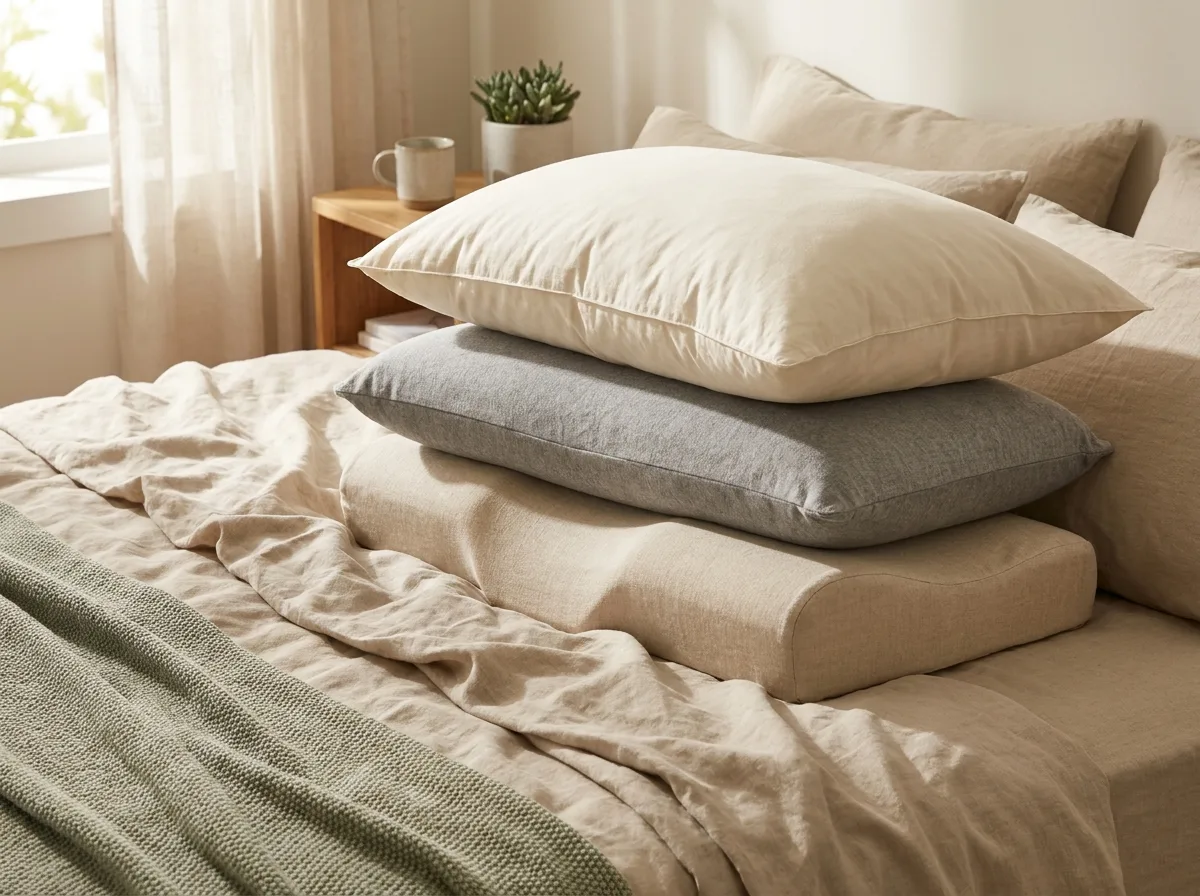
Pillows aren’t useless; let’s not be dramatic. A supportive one keeps your neck in a friendlier line overnight, and in one trial an ergonomic pillow genuinely improved people’s neck alignment and muscle endurance (Fazli et al., 2019). Getting your sleep setup roughly neutral (not stacked up like you’re reading in bed, not face-down with your head cranked sideways) is 100% worth doing.
But look at what that trial actually measured: better posture and endurance, not pain magically cured. A pillow is a night-shift worker. It clocks in for the eight hours you’re asleep and doing nothing. Meanwhile your neck’s actual problem punched in at 9am and spent the whole day folded over a laptop. No wonder the night shift can’t fix the day shift’s mess. If a pillow were the whole answer, pillow #5 would’ve done it.
What actually helps (the un-sexy but real list)
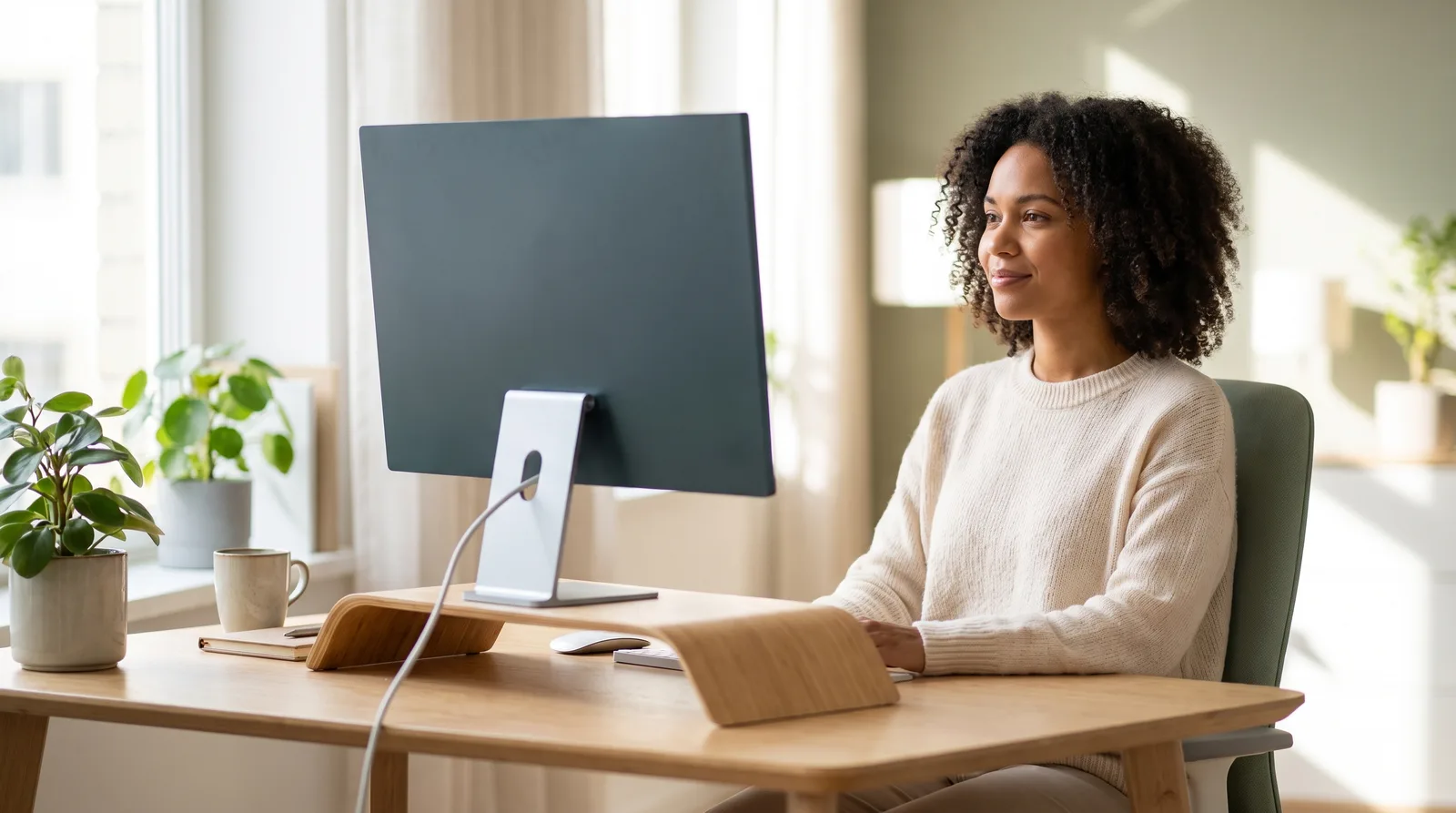
None of these is a miracle cure. Together, though, they chip away at the load that keeps setting your neck up to seize.
- Bring the screen up to you, not you down to the screen. Prop your monitor so the top is near eye level, and lift your phone toward your face instead of dropping your chin onto your chest. This is the single biggest lever for cutting all-day forward-head load.
- Move before you’re sore: your best posture is your next one. Don’t hunt for the perfect position; just keep changing it. Even a seat cushion that gently nudged office workers to fidget and shift led to less neck and back pain over six months (Channak et al., 2024). Fidgeting: officially vindicated.
- Build a little strength. Pairing basic neck and upper-back strengthening with a sanely set-up desk modestly cuts neck pain in desk workers (Frutiger & Borotkanics, 2021). Sturdier tissue shrugs off load better.
- Sort the pillow once, then quit pillow-shopping. Get roughly neutral alignment and move on with your life. The pillow is a supporting actor, not the lead.
- For a fresh crick: warmth and gentle motion beat total rest. Most cases ease within days to a couple of weeks (Vos et al., 2008). Keep it moving within comfort instead of freezing up around it.
When to close the blog and see a doctor
Quick serious note, because not everything is “just a crick.” Please get checked promptly if you have pain, numbness, tingling, or weakness spreading down into an arm or hand; a stiff neck with a fever or feeling generally unwell; neck pain after a fall or accident; or pain that’s severe, keeps getting worse, or simply won’t settle. Those can signal nerve or other issues that deserve a proper look, not a blog post.
The real villain, unmasked
Strip away the pillow melodrama and one culprit is left standing: long, unbroken stretches of forward-head screen time that quietly load your neck all day, while you’re blissfully unaware you’re doing it. By the time you actually feel it, it’s bedtime, and the poor pillow takes the fall.
That “blissfully unaware” bit is the whole trap. You can’t fix a habit you can’t even see yourself doing. Which is the exact gap we built NeckCure to close: it keeps an eye on your posture through your webcam, and the second you melt into that head-forward slump, it gently dims your screen so you sit back up, breaking the hours of sustained load into bite-sized chunks instead of one long grind.
It won’t cure a herniated disc, it won’t replace your doctor, and it definitely won’t make you sit like a mannequin. Think of it more as a friend who keeps going “psst, sit up”, except it pokes your monitor instead of your ribs. Your neck (and your closet full of retired pillows) will thank you.
References
- Hansraj KK (2014). Assessment of stresses in the cervical spine caused by posture and position of the headSurgical Technology International. PMID 25393825A static biomechanical model estimate, not a direct measurement — often cited, sometimes criticised.
- Dandumahanti BP, Subramaniyam M (2023). Influence of smartphone game play on head flexion angle, muscle activity, and load at C7 among adolescentsWork. PMID 36776091DOI 10.3233/WOR-220422
- Wilke HJ, Neef P, Caimi M, Hoogland T, Claes LE (1999). New in vivo measurements of pressures in the intervertebral disc in daily lifeSpine. PMID 10222525DOI 10.1097/00007632-199904150-00005Measured in the LUMBAR spine (lower back), not the neck. Single participant.
- Skrzypiec DM, Pollintine P, Przybyla A, Dolan P, Adams MA (2007). The internal mechanical properties of cervical intervertebral discs as revealed by stress profilometryEuropean Spine Journal. PMID 17671801DOI 10.1007/s00586-007-0458-zCadaver (non-living) cervical discs under a fixed load.
- Chen YJ, Hu CY, Wu WT, et al. (2025). Association of smartphone overuse and neck pain: a systematic review and meta-analysisPostgraduate Medical Journal. PMID 39764644DOI 10.1093/postmj/qgae200Shows association, not proof of cause.
- Grasser T, Borges Dario A, Parreira PCS, Correia IMT, Meziat-Filho N (2023). Defining text neck: a scoping reviewEuropean Spine Journal. PMID 37405530DOI 10.1007/s00586-023-07821-2Found no consistent evidence that 'text neck' posture causes neck pain.
- Vos CJ, Verhagen AP, Passchier J, Koes BW (2008). Clinical course and prognostic factors in acute neck pain: an inception cohort study in general practicePain Medicine. PMID 18565009DOI 10.1111/j.1526-4637.2008.00456.x
- Fazli F, Farahmand B, Azadinia F, Amiri A (2019). The effect of an ergonomic latex pillow on head and neck posture and muscle endurance in patients with cervical spondylosis: a randomized controlled trialJournal of Chiropractic Medicine. PMID 32874156DOI 10.1016/j.jcm.2019.02.003Small trial; outcomes were posture and muscle endurance, not pain relief.
- Channak S, Bovonsunthonchai S, Janwantanakul P (2024). The effectiveness of a dynamic seat cushion in preventing neck and low-back pain among high-risk office workers: a 6-month cluster-randomized controlled trialScandinavian Journal of Work, Environment & Health. PMID 39169894DOI 10.5271/sjweh.4184
- Frutiger M, Borotkanics R (2021). Systematic review and meta-analysis suggest strength training and workplace modifications may reduce neck pain in office workersPain Practice. PMID 32657531DOI 10.1111/papr.12940The authors rated the underlying evidence as low quality.