Posture Coach
Can't sit up straight today? It's probably energy, not willpower
Some days you just can't hold yourself upright no matter how hard you try. That isn't laziness. Holding good posture is muscular endurance, and muscular endurance runs on sleep and energy. Here is how to read your own tank, and when the smart move is to rest instead of grind.
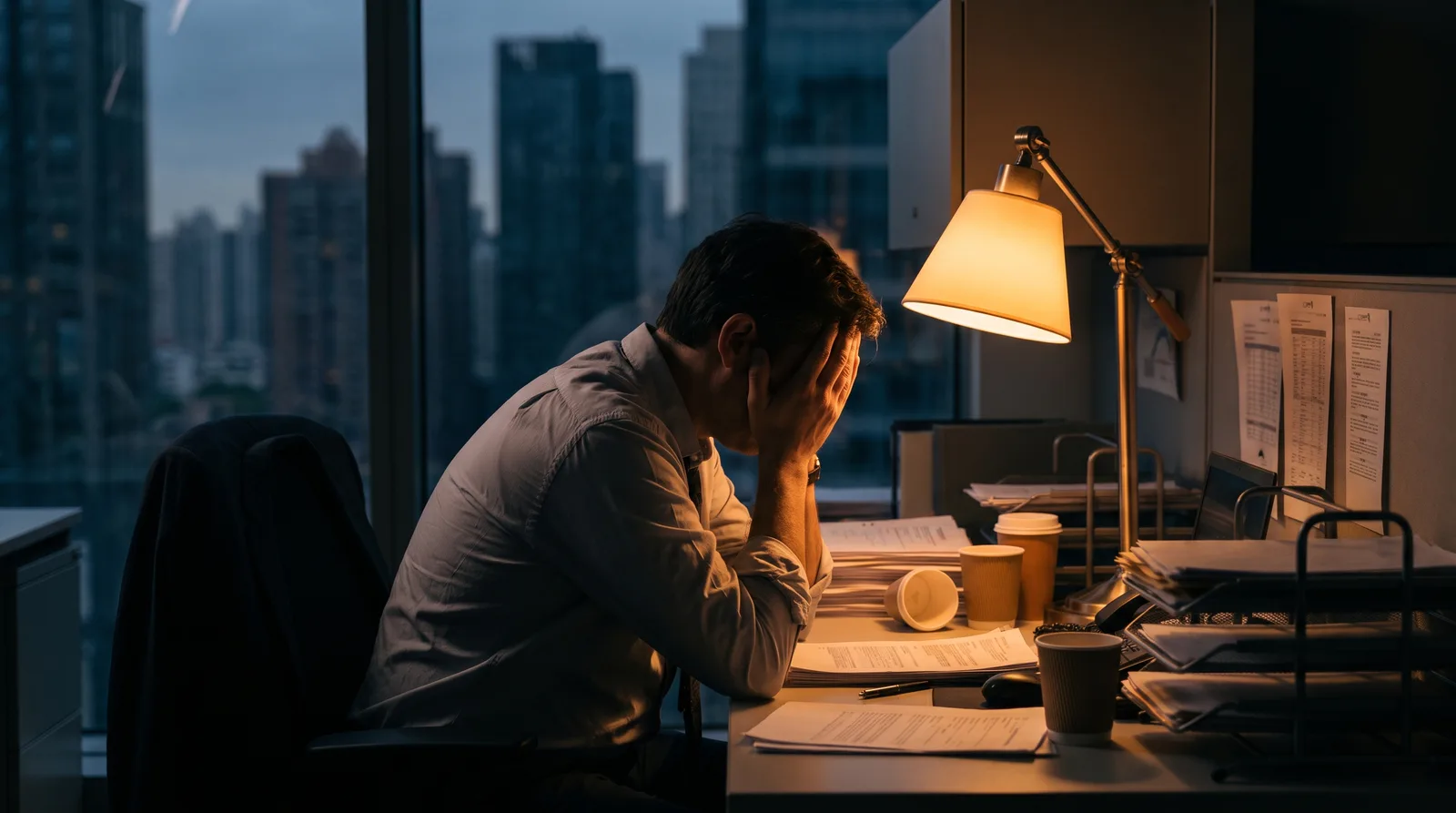
Some days, sitting up straight is effortless. Other days you square your shoulders, feel good for ninety seconds, and then, without deciding to, you’ve melted back into the same forward slump. You catch yourself, sit up again, melt again. By evening it feels like your body simply refuses to stay tall.
Here’s the reframe that changes everything about that experience: that’s not a discipline problem. It’s an energy problem. Holding yourself upright is a physical task your muscles perform, and like any physical task, it runs out of fuel. On a low day, no amount of willpower refills the tank, and understanding that is the first thing a good posture coach would tell you.
Posture is endurance, not willpower
Start with what “sitting up straight” actually is. It’s your trunk and neck muscles holding a long, low-level contraction, hour after hour, to keep your head stacked over your spine. That’s the definition of muscular endurance, and muscular endurance has a limit. When those muscles fatigue, your posture doesn’t just feel worse, it measurably gets worse: a systematic review found that when the trunk muscles tire, postural control degrades (Ghamkhar & Kahlaee, 2019). The slump at hour six isn’t weakness of character. It’s the muscles running out, exactly as they’re built to.
So the real question isn’t “why can’t I discipline myself to sit up?” It’s “why did my postural muscles run out of fuel so early today?” And the biggest answer is the one people never connect to their back.
The fuel is sleep and energy
You cannot hold an endurance contraction on an empty tank, and the tank is mostly filled by sleep and recovery. The evidence here is blunt. A 2025 systematic review found that losing sleep tends to reduce muscle strength (Easow et al., 2025), the raw output your postural muscles rely on. And a meta-analysis looking specifically at endurance found that sleep deprivation measurably impairs endurance performance (Lopes et al., 2023), meaning an under-slept body doesn’t just feel tired, it physically tires and gives out sooner.
Put those together and the bad-posture day makes complete sense. Sleep badly, or run yourself down, and your postural muscles start the day with less strength and less stamina. They hit the wall hours earlier. You spend the afternoon “failing” to sit up, when really you were asking exhausted muscles to do overtime they had no fuel for.
Read your own tank
This is where the app turns an abstract idea into something you can actually see. NeckCure quietly measures two things that behave exactly like a fuel gauge:
- Your posture-endurance hold, how long you keep good posture before it breaks into a slouch. On a well-rested day it’s longer; on a depleted day it shrinks.
- Your fatigue curve, whether you slump more the longer you sit. On a low-energy day, that curve spikes early, your muscles giving out fast.

When your endurance number is low today, that’s not a scolding. It’s the tank reading closer to empty. And that reading is information a coach acts on, not something to push through.
The coach’s move: don’t out-willpower an empty tank
Here’s the practical part, the actual coaching:
- When your endurance is low, treat it as a rest signal, not a failure. If your hold time has dropped and you’re slumping by mid-morning, your body is telling you it’s under-fuelled. That’s a cue to take a real break, switch to a lighter task, or stop, not to grip your abs harder and grind through. Grinding on empty just trades a bit more upright time now for a worse slump (and often a sore neck) later.
- Refill the tank tonight. The highest-leverage thing you can do for tomorrow’s posture happens in bed. Get to sleep earlier, and put the phone away about an hour before bed so scrolling and screen light don’t rob you of the deep sleep your muscles recover on. Tomorrow’s uprightness is being decided the night before.
- Schedule hard upright work for full-tank hours. If you know you’re freshest in the morning, do the long, focused, sit-still work then, and save the low-energy afternoon for tasks that let you move.
The honest part
Two caveats, because a coach should be straight with you. First, this isn’t a permission slip to slump forever, “I’m tired” can’t become the answer every day. Posture endurance is trainable: hold it a little, rest, repeat, and over weeks the muscles get stronger and your hold time trends up. A low day is a rest signal; a rising trend is real progress, and that’s what to watch for. Second, if you’re exhausted all the time, or in genuine pain, that’s beyond posture coaching, please see a doctor, because persistent fatigue and pain have causes worth checking.
The bottom line (and how the app helps)
You can’t sit up straight some days because uprightness is an endurance task and your muscles were low on fuel, not because you lack willpower. The fix isn’t more grit; it’s more energy, protected mostly by sleep, and the wisdom to rest when the tank is low instead of grinding into a worse slump.
That’s the whole idea behind pairing these habits with NeckCure. The app measures your endurance and fatigue so you’re not guessing at your own tank, you can see it. Read the number, then coach yourself: full tank, do the upright work; low tank, refuel and rest. The app is the gauge; the habits are the driving. Together they beat white-knuckling your posture on a day your body was never going to win.
(This is a popular posture-coaching article, not medical advice. If you have persistent fatigue, ongoing neck or back pain, or a sleep problem, please consult a qualified health professional.)
References
- Ghamkhar L, Kahlaee AH (2019). The effect of trunk muscle fatigue on postural control of upright stance: A systematic reviewGait & Posture. PMID 31207565DOI 10.1016/j.gaitpost.2019.06.010The core mechanism. When the trunk muscles fatigue, postural control degrades: you literally hold your body less well once the muscles tire. Staying upright is an endurance task, not a willpower one.
- Easow J, Bommasamudram T, Munnilari M, Adhikari R, Edwards BJ, Nayak KR, Vaishali K, Ravindrakumar A, Gallagher C, Pullinger SA (2025). Implications of sleep loss or sleep deprivation on muscle strength: a systematic reviewSleep and Breathing. PMID 40663194DOI 10.1007/s11325-025-03413-0Sleep is fuel for muscle. This review found that losing sleep tends to reduce muscle strength, the very output your postural muscles depend on to hold you up.
- Lopes TR, Pereira HM, Bittencourt LRA, Silva BM (2023). How much does sleep deprivation impair endurance performance? A systematic review and meta-analysisEuropean Journal of Sport Science. PMID 36472094DOI 10.1080/17461391.2022.2155583And endurance specifically. Pooling the trials, sleep deprivation measurably impairs endurance performance, so an under-slept body tires, and gives out, sooner.