Sleep
Is slouching the secret villain behind your bad sleep?
Slump all day, sleep badly at night. It sounds obvious. But is your desk hunch really sabotaging your sleep? We dug into the sleep science, and the honest answer is a masterclass in how a real effect gets wildly oversold.
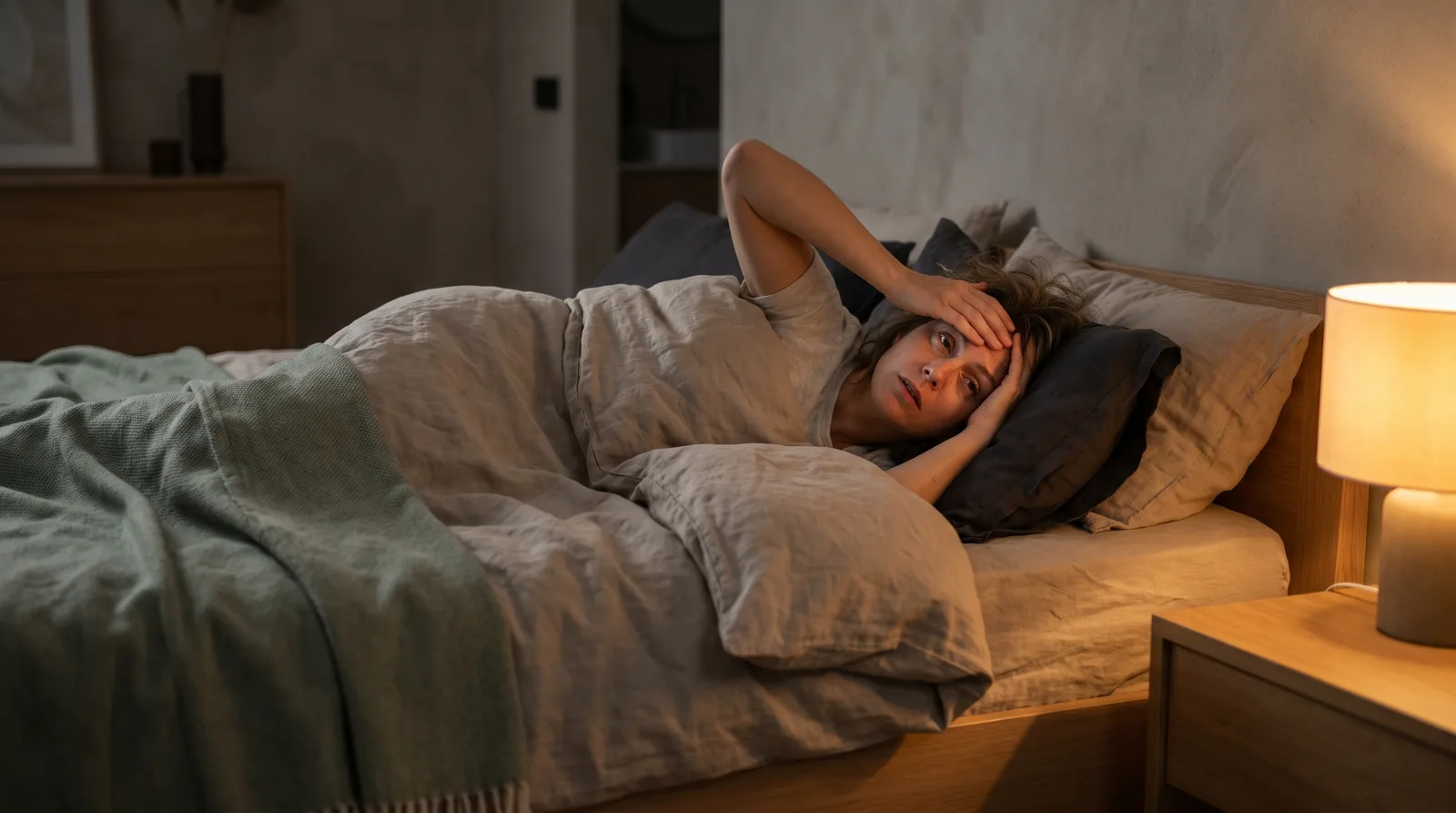
Here’s a theory you’ve probably heard, maybe from a wellness influencer, maybe from a physio: fix your posture and you’ll finally sleep properly. It sounds airtight. You slump all day, you breathe in a cramped little huddle, and, surprise, you wake up feeling like you’ve been run over. Slouching, the villain of your nights, unmasked at last.
It’s a great story. It’s also, it turns out, about 40% true and 60% oversold, and untangling which is which is genuinely useful. So let’s do it properly.
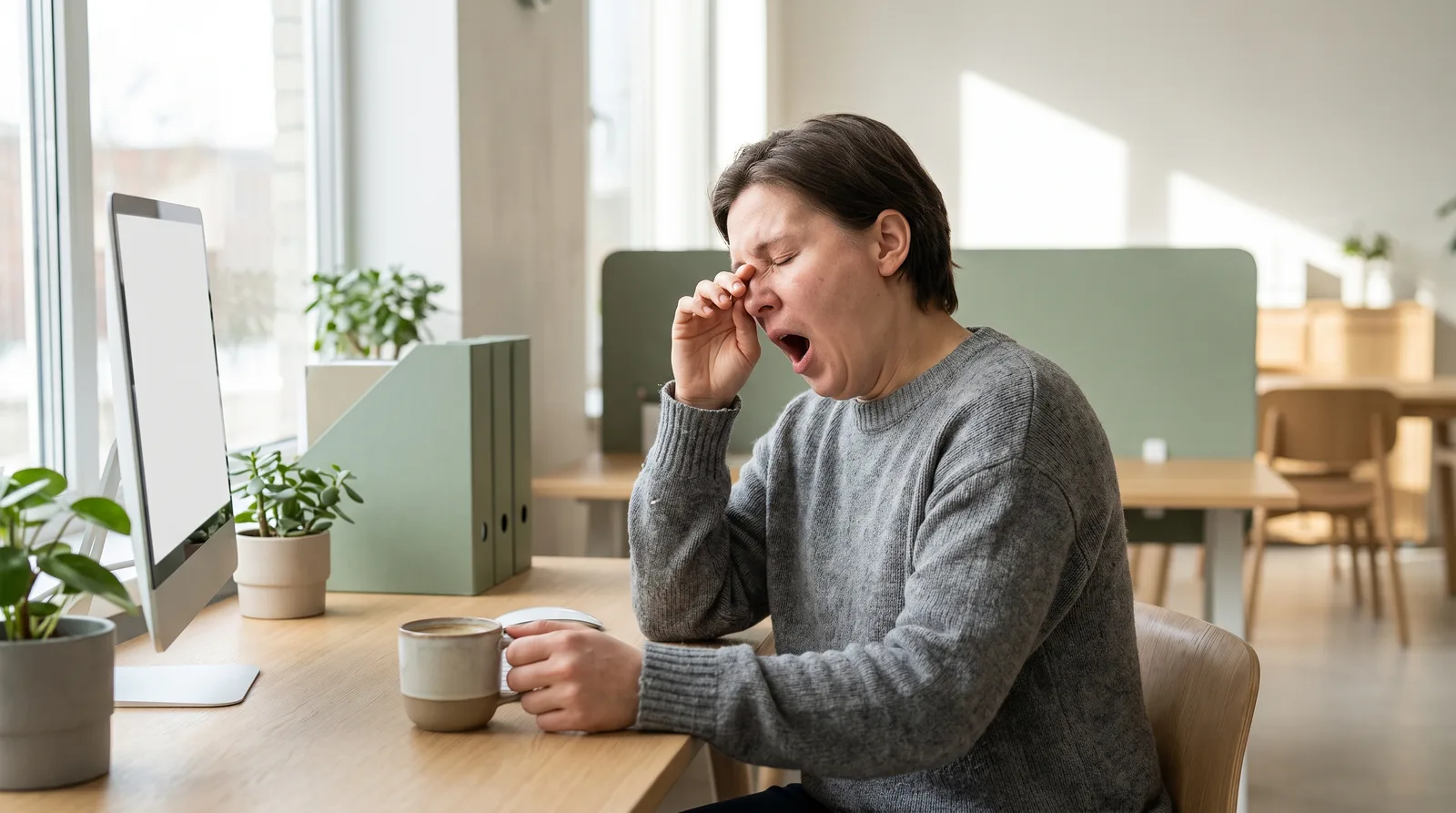
The part that’s genuinely true: head down = a narrower airway
Start with the bit the science actually backs. When you drop your head and chin forward (the classic screen slump), the space behind your tongue physically shrinks. Researchers measured it: head-and-neck flexion moves the base of your tongue closer to the back of your throat and narrows the airway inlet (Ozeki et al., 2020). And when jaw surgery changes people’s head-neck angle, the size of their oropharyngeal airway changes right along with it (Chen et al., 2015).
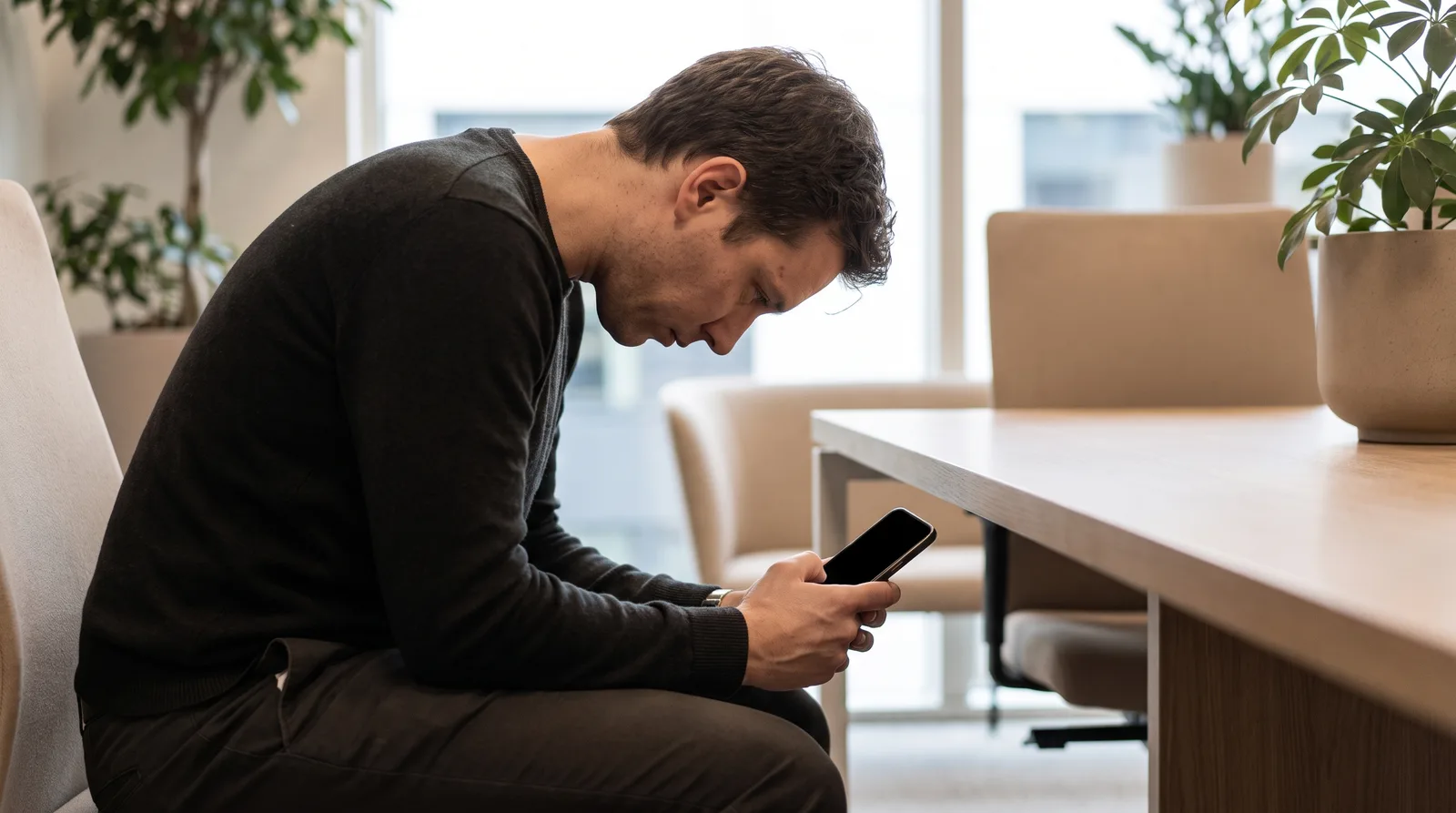
If you’ve ever had surgery, this is exactly why the anaesthetist tips your head back into the “sniffing position”: it’s the most reliable way to open a human airway. So yes: in the moment, a head-forward posture crowds the very space your breath has to pass through. That part is real.
And yes, people with sleep apnea do tend to slouch forward
Now it gets tempting. Study after study finds that people with obstructive sleep apnea (OSA, where the airway repeatedly collapses during sleep) tend to hold their heads further forward and their necks more extended, and the worse the apnea, the more pronounced the posture (Piccin et al., 2016; Afşar et al., 2026). They also tend to have more recessed jaws and altered upper-spine shapes (Arvidson & Sonnesen, 2025), and a lower-sitting hyoid bone, the little bone that anchors your tongue (Graizel-Armoni et al., 2025).
Slam dunk, right? Slouching narrows the airway, and slouchers have more apnea. Case closed.
Except this is exactly where a good story goes wrong.
Plot twist: the arrow probably points the other way
Correlation, meet causation. You two have never met. Every one of those studies is a snapshot: it can tell you slouching and apnea travel together, but not which one is driving.
And when researchers actually looked at the mechanics, the most likely answer is the reverse of the influencer version: in people with OSA, the forward-head posture appears to be a compensation: the body shoves the head forward to haul open an airway that keeps collapsing (Clavel et al., 2020). In other words, the apnea is causing the posture, not the posture causing the apnea. On top of that, a naturally recessed jaw (bone structure you’re born with) can produce both the posture and the apnea at once (Arvidson & Sonnesen, 2025). And body weight and neck size, huge drivers of apnea, muddy every one of these studies.
Put bluntly: no one has shown that hunching over your laptop by day gives you sleep apnea. Casting your desk slouch as the secret villain of your sleep is a reach the evidence doesn’t support.
The posture that does wreck your sleep is how you lie down
Here’s the twist inside the twist. There genuinely is a posture with rock-solid evidence for sabotaging your sleep. It’s just not the one you do at your desk; it’s the one you do in bed.
Sleeping flat on your back lets your tongue and soft palate fall backward under gravity, right onto the airway. In one analysis of 500 patients, about 63% had “positional” apnea, at least twice as bad lying on their back as on their side (Park et al., 2024). Rolling onto your side genuinely helps those people breathe (Gao et al., 2025).
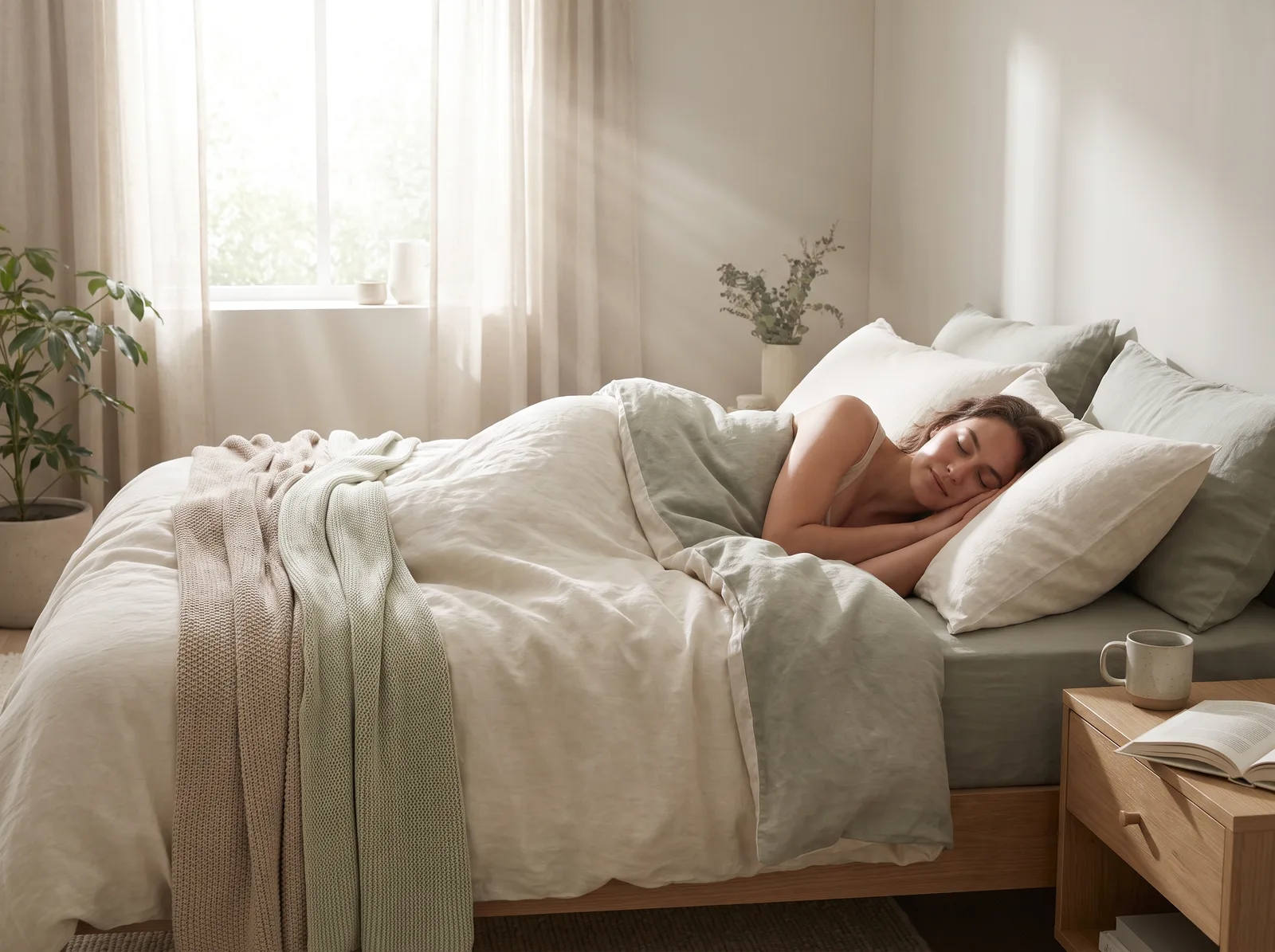
So posture really can shape how you breathe at night, but the posture that counts is your sleeping position, not your daytime hunch. Those are two completely different things, and the internet loves to blur them into one.
So what actually helps someone breathe better at night?
If night-time breathing is genuinely the problem, the evidence ranks the fixes pretty clearly, and “sit up straight at your desk” isn’t on the list:
- CPAP (the bedside air machine) is the gold standard and the most effective option, full stop (Papageorgiou et al., 2025).
- Mandibular advancement devices (a dentist-fitted mouthpiece that nudges the jaw forward) are the next tier (Papageorgiou et al., 2025).
- Side-sleeping meaningfully helps positional apnea, though it doesn’t fix everyone (Gao et al., 2025).
- Myofunctional therapy (training the tongue and throat muscles, including parking your tongue up on the roof of your mouth) is a legitimate adjunct that modestly lowers apnea severity, but the studies are small and shaky, so keep expectations grounded (Camacho et al., 2015; Pisoni et al., 2026).
Notice what’s absent: correcting your daytime posture. No study has shown it treats sleep apnea, so we’re not going to pretend it does.
When to actually get this checked
Serious note, because sleep-disordered breathing is a real medical condition, not a lifestyle quirk. If you snore loudly, gasp or seem to stop breathing in your sleep (a partner usually notices first), wake up unrefreshed no matter how long you slept, or feel sleepy through the day, please get a proper sleep assessment. Untreated OSA carries real cardiovascular risk. That’s a job for a doctor and a sleep study, not a posture tip and definitely not a blog.
The honest verdict
Is slouching the secret villain behind your bad sleep? Not really. The honest version is quieter: a head-forward posture does crowd your airway in the moment, and it does keep company with sleep apnea, but most likely as a passenger, not the driver. The posture that reliably matters for night-time breathing is how you lie down, and the fixes that actually work are medical ones.
Which means we’re going to be straight with you about where a posture app fits: not here. NeckCure looks after your waking posture, nudging you upright so you get the real, everyday benefits (easier breathing while you work, less neck strain, a small energy lift). It will not cure snoring, treat sleep apnea, or replace a sleep study, and anyone who tells you a posture gadget does is selling you the oversold 60%. If you suspect your nights are the problem, see a doctor. If your daytime hunch is the problem, that part we’ve genuinely got.
References
- Ozeki M, Toyama Y, Yasuda Y, et al. (2020). Positional effects of head and/or neck flexion as chin-down posture in normal subjectsFujita Medical Journal. PMID 35111534DOI 10.20407/fmj.2019-018Experimental, 10 healthy subjects; shows acute geometry — posture changing airway shape in the moment, not a long-term effect.
- Chen CM, Lai SS, Chen KH, Lee HE (2015). Correlation between the pharyngeal airway space and head posture after surgery for mandibular prognathismBioMed Research International. PMID 25977919DOI 10.1155/2015/251021Surgical before/after correlation (n=37); association, not causation.
- Graizel-Armoni D, et al. (2025). Sex difference in the hyoid bone position in adults with obstructive sleep apnea: systematic review and meta-analysisDental and Medical Problems. PMID 40244603DOI 10.17219/dmp/192096Meta-analysis of observational studies; a low hyoid position is associated with OSA (cannot establish cause).
- Clavel L, Attali V, Rivals I, et al. (2020). Cervical spine hyperextension and altered posturo-respiratory coupling in patients with obstructive sleep apnea syndromeFrontiers in Medicine. PMID 32118015n=24. Authors argue the forward/extended head posture is SECONDARY to the airway problem — i.e. OSA drives the posture, not the reverse.
- Piccin CF, Pozzebon D, Scapini F, Corrêa ECR (2016). Craniocervical posture in patients with obstructive sleep apneaInternational Archives of Otorhinolaryngology. PMID 27413397Case-control (n=42): more head extension/forward posture correlated with higher OSA severity. Correlation only.
- Afşar GÇ, et al. (2026). Forward head posture and deep cervical flexor muscle morphology in obstructive sleep apnea: a cross-sectional ultrasonographic analysisSleep and Breathing. PMID 41793604DOI 10.1007/s11325-026-03624-zCross-sectional (n=85, only 18 controls); BMI and neck circumference are major confounders.
- Arvidson AMA, Sonnesen L (2025). Phenotypic craniofacial and upper spine characteristics in patients with obstructive sleep apnoeaDentistry Journal. PMID 40136764DOI 10.3390/dj13030136OSA patients were more retrognathic (recessed jaw) AND more forward-headed — suggesting jaw structure may drive both (a common cause).
- Park JS, et al. (2024). Polysomnographic phenotype of positional obstructive sleep apneaJournal of Rhinology. PMID 39744446DOI 10.18787/jr.2024.00039n=500: 63.4% had positional OSA — at least twice as severe lying on the back as on the side.
- Camacho M, Certal V, Abdullatif J, et al. (2015). Myofunctional therapy to treat obstructive sleep apnea: a systematic review and meta-analysisSleep. PMID 25348130Tongue/oropharyngeal muscle training cut adult AHI ~50% — a modest adjunct; small, heterogeneous studies.
- Pisoni E, et al. (2026). Myofunctional therapy in adults and children with obstructive sleep apnea: an overview and re-analysis of systematic reviewsJournal of Sleep Research. PMID 41045206DOI 10.1111/jsr.70219Re-analysis of 9 reviews; benefit exists but most underlying trials are high risk of bias — interpret cautiously.
- Gao Y, et al. (2025). Comparative efficacy of sleep positional therapy, oral appliance therapy, and CPAP in obstructive sleep apnea: a meta-analysisFrontiers in Medicine. PMID 39963428DOI 10.3389/fmed.2025.1517274Positional (side-sleeping) therapy lowers supine AHI but not overall AHI, and is inferior to CPAP.
- Papageorgiou SN, et al. (2025). Comparative efficacy of non-pharmacological interventions for adults with sleep apnea: a systematic review and network meta-analysisSleep Medicine. PMID 39933212DOI 10.1016/j.sleep.2025.02.008197 RCTs: CPAP consistently most effective; oral appliances next; conservative training has weak evidence.